Sideways in Time: The Keys of Marinus / Dr. Terror’s House of Horrors
‘The weird. The unknown. The terrifying. The mysterious…’ It’s said that Milton Subotsky considered The Keys of Marinus as the basis for a third Dr. Who movie in 1966. If this is accurate, it’s not difficult to see why: Subotsky’s greatest success to date had been the movie he made directly before Dr. Who and the Daleks: Dr. Terror’s House of Horrors. It’s a portmanteau film – made up of five distinct “episodes” wrapped in a sixth, over-arching story – inspired by Subotsky’s love of the 1945 horror Dead of Night. Perhaps, when he was mulling over a third Dr. Who film following the disappointing box office of Daleks’ Invasion Earth 2150 A.D., Subotsky saw an opportunity to combine the Dr. Who brand with his own particular obsession for anthologies, and naturally landed on Doctor Who’s first and (depending on your view of The Chase) last portmanteau horror.
“Horror?” you gasp. But none less than Philip Hinchcliffe recognised The Keys of Marinus for what it is, when he came to write the novelisation in 1980. Consider its settings: a gloomy pyramid full of traps; monsters lurching through the ice; evil alien brains, and how similar horror elements crop up in Hinchliffe’s own TV episodes. The obscene vegetable matter that bursts through the walls and windows of The Screaming Jungle to feed on human beings is an image almost exactly repeated in 1976’s The Seeds of Doom – and in Dr. Terror’s House of Horrors’ Creeping Vine episode.
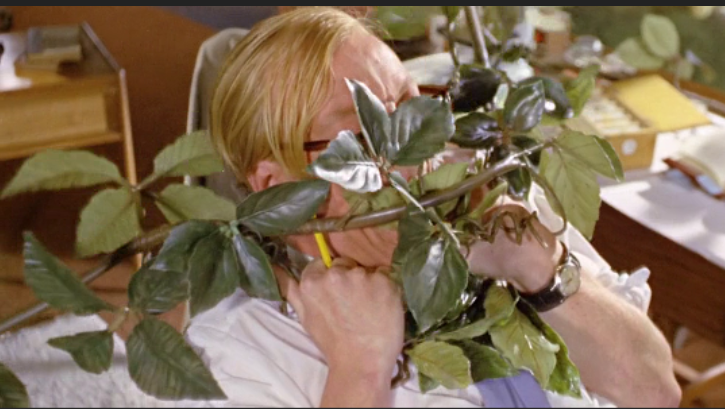
Dr. Terror’s other episodes have fewer obvious links to The Keys of Marinus, beyond the general tone of rather guileless characters wandering into fates that (Christopher Lee’s sneering art critic Franklyn Marsh aside) are disproportionately more gruesome than they deserve. The mind games on display have less to do with Morphoton Brain powers and more to do with older characters manipulating the young – a plot point in both the opening Werewolf and closing Vampire episodes. And Dr Terror doesn’t include anything as long-winded and involved as the Millennius murder mystery. If you squint very hard you could argue there’s some link between the ice zombies rising from their living death to pursue those who disturbed their treasure, and Dr Terror’s “voodoo” practitioners hunting down Roy Castle for stealing the music of their god Dambala.
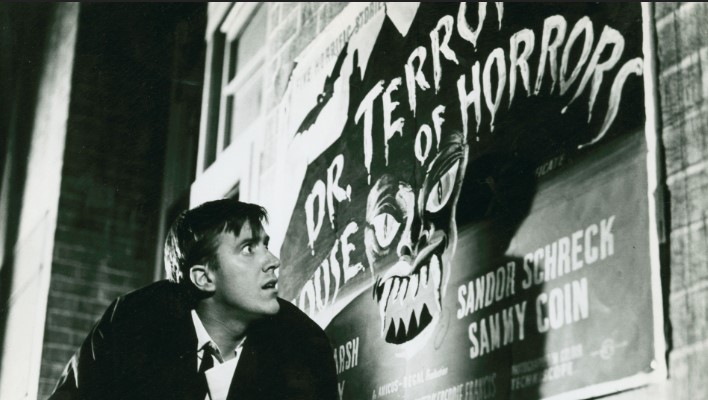
But had Subotsky made The Keys of Marinus in 1966 as his third Dr. Who movie, I think Dr. Terror’s House of Horrors offers an obvious and compelling template, not least because Peter Cushing and Roy Castle are present in both Dr. Terror and Dr. Who. Assuming Cushing would have returned for a third bite, you could imagine Subotsky seeking out someone like Bernard Lee to play Arbitan (Christopher Lee, at this stage in his career, seems unlikely to have consented to play in a kiddy flick). Francis De Wolff might have reprised his role as Vasor. Maurice Denham a plausible Darrius. Speculating wildly, maybe it would just be Dr. Who and Susie who arrived on Marinus, with Althos (Donald Sutherland) and Sabetha (Judy Huxtable) fulfilling the new companion roles.
Clearly none of this came to pass – and I’m not even sure whether it was ever more than a passing fancy. But if any Doctor Who story deserved the Amicus treatment, I can’t think of a better candidate than The Keys of Marinus and so I’m willing to go all in on the idea that Subotsky was seriously contemplating it. I want to see the cobweb-draped, gel-lit pyramid interior; the hand of a zombie ice soldier twitching to life; the grotesque, orange Brains of Morphoton pulsating with psychic energy, and Michael Gough’s Yartek leering from under a stolen cowl. It’s too good not to be true.
Next Time: The Aztecs / The Feathered Serpent
Sources: Dr Terror’s House of Horrors (Odeon Entertainment Blu-ray, 2015); Dr. Who and the Daleks (Studio Canal Blu-ray, 2013); Amicus: The Friendly Face of Fear (Allan Bryce, 2016)
 Next Time...
One comment