Doctor Who And… 42: The Time Warrior (29/6/1978)
Written by Terrance Dicks, based on Robert Holmes’ scripts for the 1973-4 TV serial
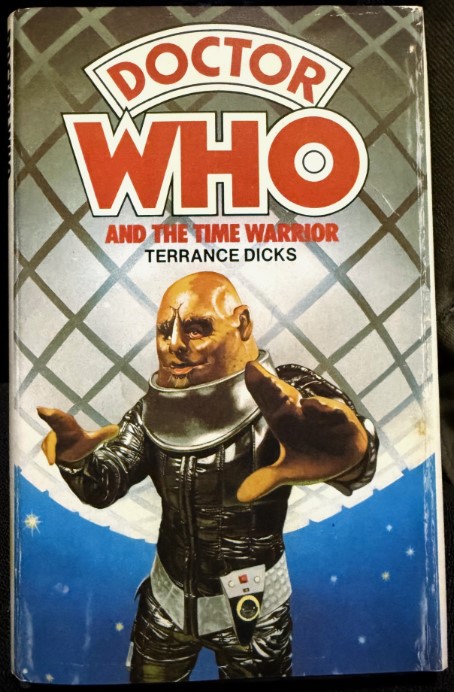
The prologue, written by Robert Holmes, is brilliant: an insight into the final combat flight of Jingo Linx, with details of Sontaran battle strategy, a dogfight with Rutan warships and a grisly description of the recharge process that shows, in much more detail than any TV episode, the purpose of the probic vent. But there’s no dip in quality when Dicks takes over for the novel proper. As is usual, he seems to relish Holmes’ gallery of grotesques and the mordant dialogue. He also takes time to characterise the mindset of the story’s medieval folk, and the reality (to them) of tangible evil and the existence of demons.
Going beyond what was onscreen, Dicks presents Sarah Jane’s first trip inside the TARDIS (just as he did for Harry in Doctor Who and the Giant Robot), and leans into what might be read as the casual sexism of the scripts, turning this, in a minor way, into a battle of the sexes story. When the Doctor suggests Sarah Jane might make him some coffee, Dicks notes: “The Doctor couldn’t have made a more unfortunate joke. Sarah had been making her own way in a man’s world for some years now, and she strongly resented any suggestion that her sex doomed her to an inferior role.” Professor Rubeish misogynistically declares, “Some women can think almost as well as a man”, and Irongron has nothing but venom for his true nemesis, the fearless Lady Eleanor Fitzroy. And yet, it’s the boldness of the women (and a bit of the Doctor’s “wizardry”) that ultimately wins out over Irongron’s belligerence and Linx’s alien cunning.
I’ve always felt this was one of Jon Pertwee’s finest performances as the Doctor – his nonchalance in the face of Irongron’s assault on Sir Edward’s castle is utterly Doctorish, and he gets some of his best ‘moments of charm’ wooing Sarah Jane. Dicks sheds some more light on this, and ties the book to Target’s growing continuity: “Ever since his assistant Jo Grant had surprised everyone suddenly, by getting married, the Doctor had been unusually irritable. He had brusquely refused the offer of a new assistant, saying he’d manage on his own. The Brigadier knew that the Doctor missed Jo, and he also knew that the Doctor was far too stubborn to admit it.”
With risqué jokes (“She’ll not creep far before one of my guards catches her tail”), some clever foreshadowing (Sarah talks about seeing “a great spider”), and a brilliant new villain, this is one of the great Doctor Jon adventures in any format. While Dicks’ novelisation tends to highlight a bit too much of the to-and-fro between castles in the last episode, it’s made up for with a superb death scene for Linx that ends this on a high. Grade 2.

Next Time: Doctor Who And… Death to the Daleks.
 Next Time...
One comment