History of Horror: The Cat and the Canary
Dir. Paul Leni, USA, 1927
Opening with a hand clawing away cobwebs to reveal the opening titles, The Cat and the Canary deploys all the tricks of German and American cinema in a virtuoso, last-minute masterpiece of silent film-making. It’s rife with all kinds of neat touches – from animated intertitles that deploy different fonts, punctuation and crash zooms to mimic the cadence of the human voice, to superimposed skulls, giant cats and medicine bottles that reflect the inner lives of the characters.
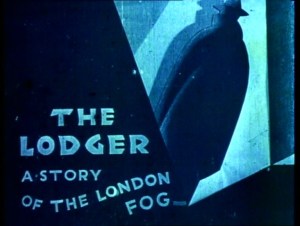 One of the earliest films to be based on the Jack the Ripper murders, and one of Alfred Hitchcock’s first pictures, The Lodger is not, strictly speaking, a horror film. Nor is it even a ‘Hitchcockian thriller’, except in the most tentative sense.
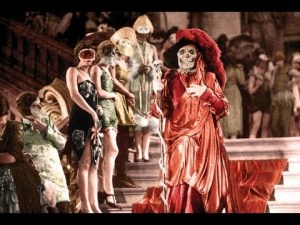 The most famous of Lon Chaney’s horror roles (he’d also played Quasimodo in 1923, and would go on to play the vampire in London After Midnight in 1927), The Phantom of the Opera is a pretty faithful adaptation of Gaston Leroux’s 1910 novel.
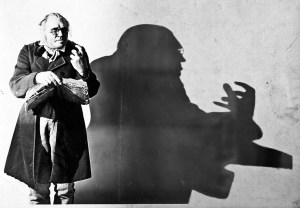 Eureka’s 2014 Blu-ray makes the bold claim that The Cabinet of Dr Caligari is ‘the first true horror film’. While not really true, it’s probably fair to say that this is the earliest horror film whose influence has endured beyond the silent era. It’s visually striking – right from the queasy green-tinted title cards with their odd, abstract designs a discordant note is struck which follows through both in the much-praised expressionist set design, but also in the spiky, disjointed story.
 Next Time...