Doctor Who episode 5: The Dead Planet (21/12/1963)

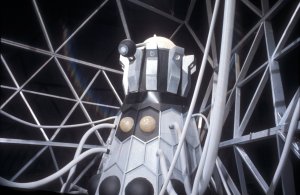
This one sets the scene for most of the early ‘space’ adventures. Whereas the history stories usually begin with the crew being captured and separated in fairly short order, the space adventures take a bit more time to explore the environment. The Dead Planet is particularly memorable because of the effort that’s gone in to making the planet so alien. The petrified jungle is stark, with weird, rectangular leaves – quite a difference from the prehistoric Earth forest last week. It’s also shot with a weird ‘negative’ effect, at least for the first 30 seconds, which makes it look as strange as Vortis and creates a link between the dead planet and the Daleks’ death ray effect.

Continue reading
The Avengers: Series Three reviews

tumblr_nx9ds5xBWu1tcv3kwo6_500

Concerto

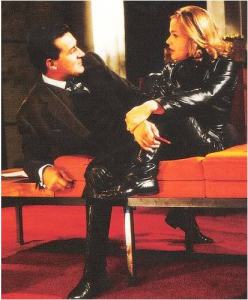
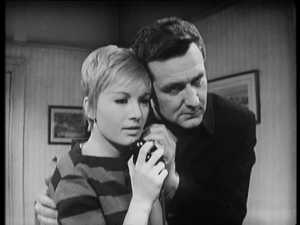
Series Three begins as it means to go on – a new, glossier title sequence with a big, bold new logo. Glossy and bold – just like the episode itself. There’s a new sense of self-assurance here, as the pieces all start to fall into place. Steed is much more to the fore than previously. Macnee positively sparkles in his scenes with Nigel Stock as the lugubrious foreign agent Zalenko – their verbal sparring is the shape of things to come. Zalenko’s description of him as ‘a man about town whose other activities are fairly obscure’ pretty much sums up Steed from here on in. The focus on Steed does tend to be at the expense of Cathy – here she’s tied up and subjected to a nasty game of one-sided Russian roulette – but even this is a taste of the future, when Mrs Peel tended to get tied to something most weeks. Nevertheless, Cathy and Steed’s relationship, whilst retaining a hint of the antagonism of the previous series, has mellowed. This is much more like it. Confident, fresh, sharp and witty, this is a smashing episode with more than a little playful self-awareness – such as Zalenko’s comment that he learned his fighting techniques from watching British TV! Splendid stuff.

Continue reading

Doctor Who episode 4: The Firemaker (14/12/1963)

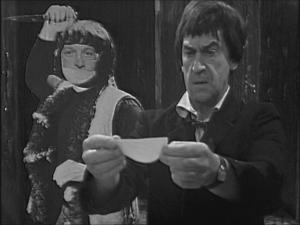
The start of this episode gives Hartnell a great moment of showmanship, unveiling Kal as the murderer of Old Mother by manipulating him into revealing the murder weapon, and then encouraging the tribe to turn against him. It’s a fantastic scene, and I think an inspiration for the Millennius trial sequence in The Keys of Marinus. It’s probably this moment of cunning that later convinces Ian to acknowledge the Doctor as the TARDIS ‘tribe’s’ leader to Za, although the final moments of the episode make it clear that this is only a temporary rapprochement.

Continue reading

Doctor Who episode 3: The Forest of Fear (7/12/1963)

The most quoted bit of The Forest of Fear comes in the first couple of minutes: ‘Fear makes companions of all of us.’ It’s a charming moment, beautifully played by Hartnell and Hill. But it’s atypical of the episode, which elsewhere pits the Doctor’s self-centredness against Barbara’s compassion. This is most represented in the moment when the Doctor picks up a rock, clearly to finish off the injured Za and make good his and Susan’s escape (Ian’s visible disgust at this point is one of the best William Russell moments). It’s the third time in the episode that a lot of focus is placed on a hand clutching a sharp rock. In the opening sequence, Old Mother steals Za’s knife, and Waris Hussein dwells on it, in close up, for several seconds. Later, there’s a focus on Kal’s knife as he finishes off Old Mother. These are all the moments of most apparent peril.

Continue reading

Doctor Who episode 2: The Cave of Skulls (30/11/1963)

In the first episode, the Doctor talks about the Red Indian seeing the first steam train. The Cave of Skulls begins with a caveman seeing a time machine materialising from thin air. Inside the TARDIS, the time travellers are still arguing. Ian still refuses to believe – clinging to his old ideas. Barbara is more imaginative. I love the shot of the TARDIS doors opening to reveal the frozen sands of prehistoric Earth. Outside, the Doctor is perturbed by the TARDIS’ failure to change shape. It’s the first hint we get that he doesn’t really have any idea how to properly work the Ship. Susan remains odd – prone to hysterical outbursts when she realises the Doctor has been kidnapped by the watching caveman.

Continue reading

Doctor Who episode 1: An Unearthly Child (23/11/1963)

Although I’ve seen or heard every Doctor Who story at some point, I’ve never done the start-to-finish, episode by episode watch through that’s the hallmark of a true fan. So, in this hiatus year I thought I’d take the opportunity to go back, back to the beginning, and review each episode, one by one. Here goes…

It’s weird from the off: strange, swirling interference, like something’s gone wrong with the TV. Without resorting to The Outer Limits’ ominous voiceover, it’s basically saying that for the next 25 minutes we’re entering the Doctor’s world. The first character we see is a policeman, drawn towards a strange, humming Police Box that then dissolves into the corridors of Coal Hill school. The next five minutes introduce three of the four regulars. Barbara gets the first line: she’s established as being considerate, tenacious and interested in people. Ian is a bit more laid back: wry, plain speaking, with a matter-of-fact solidity to him that balances out Barbara’s intuition. The third wheel is Susan, who’s just a bit odd and exotic. Right from the off she’s more an object of idle curiosity than a character with much agency of her own.

Continue reading

Classic Series Rankings Day 16: The Top Ten Doctor Who Stories Ever

Mindrobber_ep2

  1. The Mind Robber

The ultimate Doctor Who collage: sci-fi robots, comic strip heroes, creatures from myths and legends, classic historical literature and fairytales lining up to battle the Doctor: all of time and space, everything that ever happened or ever will. The white void in the first episode, and the TARDIS explosion cliffhanger are incredibly powerful images, and the finale, summoning characters to do battle, is astonishing. Maybe not quite as inventive as is sometimes claimed – it’s not like The Avengers and The Prisoner hadn’t touched on similar ideas – but the way it makes a virtue of the unexpected extra episode and Frazer Hines’ sickness absence deserves all the praise it gets. If anything, with its focus on wordplay, childhood, pop art, and breaking the fourth wall, this is the most 1960s story of all. However, the bit of spit at the corner of the Master of the Land of Fiction’s mouth is the most disgusting thing in the whole of Doctor Who.

Continue reading

Classic Series Rankings Day 15: 20-11

post-1283-0-85012700-1308754061


  1. Warriors’ Gate

The one great story from Season 18 – as fairytale as Traken, filled with memorable images from the white void and the ruined gateway, to the black and white gardens and the cobwebbed great hall. Dropping a load of crass slave traders into the surreal landscape is the real genius of it: the Privateer crew stop it from becoming an ethereal and abstract story and introduce a tangibly solid threat. It helps that they’re written in a much more believable way than most of the characters this season. I like Doctor Who when it gets weird, and it doesn’t often get weirder than this.

Continue reading

Classic Series Rankings Day 14: 30-21

vlcsnap-2011-01-24-17h06m29s158


  1. The Robots of Death

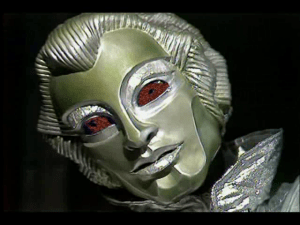
Lovely design work, and some well-integrated special effects (the red, glowing eyes; the shot of the sandminer bridge). It’s the first Doctor Who story to pick up on the slasher movie genre, with a villain who’s not just a Zaroff-style mad scientist, but also an insane killer. Leela works well in this, and it helps that she’s being written by Boucher for the second time in a row. There’s a sense that after Harry, who was a bit thrown away, and Sarah Jane, who was ultimately defined purely by Elisabeth Sladen’s performance as a foil for Tom Baker, a lot more thought and effort is going in to the new companion. Pardon the pun, but this is gripping.

Continue reading