1989: Survival

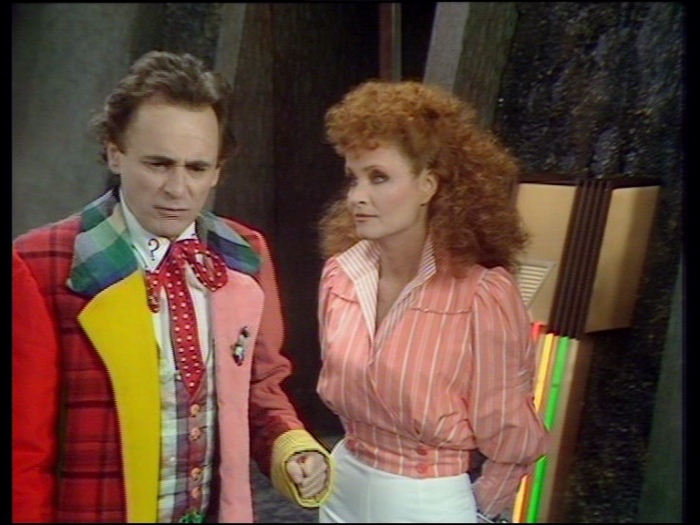
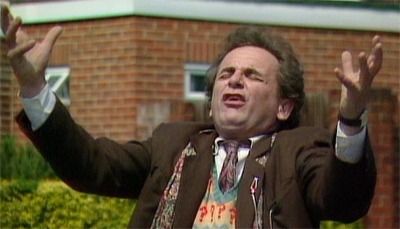
doctorwho-survival16December 1989. The end of a decade; the end of an era. On 23rd November, Sir Anthony Meyer challenged Margaret Thatcher for the leadership of the Conservative Party, taking another step towards Tory matricide. On 3rd December, in the aftermath of the Berlin Wall’s fall, Thatcher, George Bush and Mikhail Gorbachev declared that the Cold War was over. And on 6th December 1989, at 7:59pm, Doctor Who ended.

It wasn’t a spectacular death. There were no announcements, no grand finale like Blake’s 7’s final massacre. We never saw the body.

Even in 2013, it’s hard to watch Survival without being acutely aware that, until 2005, for most people this was the last-ever story. Of the five million that tuned in to Part Three, only a tiny fraction, maybe one per cent, followed Doctor Who through the long 1990s. Twice as many tuned in for the TV movie in 1996, but the McGann film doesn’t have the same melancholy overtones as Survival – it was a false start, rather than an ending.

The thing is, unlike Logopolis, these overtones only exist in the heads of fans. Or maybe only in the head of this fan. Survival wasn’t even written as the last story of Season 26, and certainly not as the last-ever Doctor Who. Apart from the tacked-on monologue that was recorded months after the rest of the story, there’s nothing here that eulogises Doctor Who, or does things that only a final episode can do. Rona Munro just gets on and tells the story she wants to tell, blissfully unaware that it’s the last story this show will ever tell.

And what a story. Over the McCoy era, I think there is a general upwards trend in quality. Time and the Rani is by far the worst seventh Doctor episode, but even that’s on an upward trajectory from the show’s lowest point in 1986. Season 25 is a marked improvement, and Season 26 is one of the strongest ever. The Curse of Fenric is a fantastic synthesis of everything that’s great about Hinchcliffe Gothic, mixed with a healthy dose of Cartmellian social politics. Then we get to Survival.

The first thing to note about this is the one everyone since 2005 has noticed: this is the first ever Doctor Who story that takes place in suburbia, in the living rooms and the front gardens of London. The TARDIS lands at the end of a nondescript street, the Doctor hunts alien predators across the pavements and behind the privet hedges as curtains twitch and the Neighbourhood Watch worries. The Master invades a council flat. The Doctor goes shopping at the local supermarket. This goes beyond Yetis in the Underground and Autons on the High Street: Doctor Who has invaded the sitting rooms of Zone 4, taken over the kids’ adventure playground.  The first new series story they made, Aliens of London, has a companion returning home for the first time to discover she’s a missing person, it has a monster invading a council flat and sly digs at the current government.

There is a direct, unbroken link between Survival and the 2005 series, over and above any of the innovations that are going to come from the New Adventures or the Big Finish audios. It would be perfectly feasible to jump from this to Rose and ignore everything that came in between – which is exactly what most people did. The fact that John Nathan-Turner, Alan Wareing, Andrew Cartmel and Rona Munro got in an Eccleston story 16 years early is utterly remarkable.

Because this feels more like an Eccleston story than anything else: it’s angry, edgy. Rona Munro wanted to attack the savage, tribal politics of the 1980s – the politics that generated statements like “greed is good” and “there’s no such thing as society”. Paterson talks about “survival of the fittest” and “self defence” (with the emphasis very much on the self). He talks about kids having to “fight or go under” as though they’re small businesses. Hale and Pace make the same points in their little shop, and McCoy, apparently improvising the Doctor’s response, comes up with one of the best lines of the story – even if you manage to out-run your friend, saving your own skin while the chasing lion eats them, “What happens when the next lion comes along?” The first episode sets up all these ideas, and is crammed with beautiful details like the hunt saboteurs tin that Ange rattles at Ace, the run-down youth club suggesting the Tory government’s abandonment of the young.

Then the second episode, predominantly set on the Cheetah Planet, shows the consequences of a society of dog eat dog (or whatever). The Master makes the point that the planet has been torn apart by the savagery of its inhabitants, and it’s infectious – not even a Time Lord can fight against a society that’s institutionalised violence. The quarry used the previous year to record The Greatest Show in the Galaxy is suitably alien, by all accounts baking hot. It looks hostile, and like a believable environment, with valleys, lakes, wooded areas and ruins. There’s a sense of scale you don’t often get in classic Doctor Who.

The third episode returns to Earth for the show-down. It’s probably the weakest of the three, largely because the duelling motorcycles feels like a stunt tacked on to provide an unnecessary explosion to the climax. The real climax comes when Ace and the Doctor reject the violence on both planets – “If we fight like animals, we die like animals!”

In Ace’s case, this not only provides a moral to the story, but also is an important moment for her character. Season 26 is largely a story about Ace growing up and overcoming her demons including her relationship with her mother and memories of the racist attack that’s haunted her for years. Going from a delinquent who brews home-made explosives to a young woman who recognises that most important problems can’t be solved by blowing them up, the Ace of Survival isn’t a kid any more. One of the great missed opportunities of the New Adventures and the Big Finish audios is that they generally fixate on the Ace of Battlefield and not the Ace of Survival. The character development of Ace and the performance of Sophie Aldred are two of the great joys of the McCoy years, and another precursor to the 2005 series and Rose’s growth from shop assistant to Bad Wolf, Martha’s journey from student to revolutionary and Donna’s from squawking harpy to the most important woman in the universe.

The use of the Master is interesting: he seems more of a distraction to the Doctor than a real threat to be dealt with. “Survival is what he lives for” says the Doctor at one point. Given the Master’s downward trajectory from galactic master criminal, to decrepit psychopath clinging to life, to a villain openly mocked by the Rani and playing second fiddle to the Valeyard, the last few years haven’t been auspicious. Survival doesn’t exactly restore dignity to the character – quite hard when he’s transforming into a feral beast – but Munro does pick up on the Ainley Master’s occasional savagery, and uses that to make him nastier than he’s been at any point since Castrovalva. His degeneration was, famously, meant to have contrasted with the Doctor’s evolution to something more than just a Time Lord. Probably wisely, these sequences were cut, although it slightly robs the final confrontation between the two of the yin and yang element – something that the McGann movie actually improves on, by having a dying and decaying Master contrast with a young and strong new Doctor.

Above all, the most important thing about Survival is that it’s very, very good indeed. It’s not quite like the rest of the Sylvester McCoy years – there’s no great threat from the Doctor or Ace’s past rising up to menace them; no final showdown with ancient gods. All the scenes that would have furthered the “Cartmel Masterplan” were excised before recording. But where it is very much a McCoy story is in the mix of the epic and mundane. It suggests that what goes on in an ordinary street in Perivale is every bit as important as exploding planets, that these ordinary people with their cats and their cars and their youth clubs are worth fighting for.

Doctor Who started off as the story of two very ordinary teachers who, through concern for a child, were dragged from present-day London into a universe of danger and monsters and life and death. Somewhere along the line, in 26 years full of Time Lords and Guardians, Emperors and Intelligences, revolutions on alien worlds and the heat death of the universe, something was lost. Survival begins with ordinary people being kidnapped from present-day London and taken to a baking, bone-strewn desert and a forest of fear. The lessons here, that fear makes companions of us all; that violence is ultimately self-destructive; that no matter how different we might look, humanity is constant, and that no one individual, no matter how fast or fit or self-reliant, is stronger than the whole tribe, are the very first lessons we learned all those years ago.  In its way, Survival is as magical and revolutionary as An Unearthly Child. If this is an ending, then it’s the best ending we could have wished for.

But it’s not. It’s a new beginning. On 6th December 1989, in a council flat in Perivale, the Doctor and Ace comfort a little girl. A few miles away, in another council flat, a widow sits on her daughter’s bed and tells her own little girl a story. Rose Tyler – the Doctor is coming to get you.

Next Time: “Then suddenly, one year, there was no spring.” 1990.
1988: Remembrance of the Daleks

doctor-who-remembrance-of-the-daleks-dalek-attack-sylvester-mccoyOctober 1988.  In the year since the last blog entry, Margaret Thatcher became the longest-serving British Prime Minister of the 20th Century, just as the Government announced that the Poll Tax would be introduced in 1990. Oblivious that the chain of events that will culminate in her defenestration have been set in motion, Thatcher declares she will remain in power until 1994. Hubris, as ever, will be followed by Nemesis.

And in Doctor Who, celebrating the silver anniversary we have Nemesis of the Doctor – sorry – Remembrance of the Daleks. The longest-running science fiction television series of all time is only a couple of years away from its own demise. However, there is nothing in Remembrance that suggests that this is a moribund show crawling towards death.

Instead, we get the best story since 1984, and arguably since 1979. Or, not unarguably, the best story ever. Because however good The Caves of Androzani is – and it is astonishingly good – it is by no means a viable model for how to make Doctor Who. All the lessons taken from it – the cynicism, the violence, the Doctor’s tangential involvement in the story – were ones that helped to wreck Season 22 and ended up poisoning the series just as effectively as the raw spectrox poisoned the fifth Doctor, to the point that a kill-or-cure regeneration was really the only way to go. In Androzani, Robert Holmes shows us a beaten Doctor who’s given up getting involved or trying to avert massacres as a pay off to “There should have been another way” and “I must mend my ways”.

Remembrance, on the other hand, presents us with the Doctor the sixth might have been – a Doctor who’s no longer effete, neurotic and incapable of effective action, but one with a plan to put an end to evil, and the energy to follow it through.

Given by 1988 Doctor Who was obviously on life support, Remembrance is far, far better than anyone really needed it to be. It has a kind of swagger to it – “I can do anything I like” – that belies the fact this is still a programme utterly unloved by the BBC. It’s a show that’s proud to celebrate 25 years of Doctor Who whilst giving us a new approach to making the show – a new Dalek paradigm if you like. It’s so self-confident that it’s even willing to incorporate Doctor Who the TV series into itself, circling back to 5:15pm on Saturday 23rd November 1963. Remembrance is like the serpent consuming itself, and what it spits out is a synthesis of what most people in 1988 would have identified as the Golden Age – that vague period between the mid-1960s and the mid-1970s when Patrick Troughton worked with UNIT to defeat Davros and his army of Daleks. In other words, a Golden Age that only ever existed in people’s imaginations, one that takes the best bits of this halcyon vision of what Doctor Who used to be, back in the day, and works them into a story that’s not quite like anything that’s gone before.

Both Ben Aaronovitch and Sophie Aldred mention that Jon Pertwee was their first Doctor, and Remembrance of the Daleks is superficially like the Pertwee era, with the everyday lives of British people disrupted by alien invasions, and a slightly bumbling military operation aiding and obstructing the Doctor in equal measures. It even opens, like Spearhead from Space (and Rose) with a shot of the lonely Earth from space. The references to “Brigadier” and “scientific advisors” drafted from Cambridge obviously recall the UNIT years, but unlike some of the more laboured continuity of something like Attack of the Cybermen, they’re generic kisses to the past rather than specific references. And there’s an equal mix of epic, Hinchcliffe-era cosmic horror, alien possession and a (literally) buried threat from the past rising to menace the present. Meanwhile, Sylvester McCoy’s written like Tom Baker’s Doctor but plays it like Patrick Troughton – a space vagrant who fights monsters.

Beyond that, though, it feels like the whole of Doctor Who is in here, from an unearthly child chanting sinister rhymes in the playground of Coal Hill School to the Dalek Emperor from the TV21 comics to a companion who’s like Leela mixed with Sarah Jane (a violent anarchist revolutionary who’s also the Doctor’s best friend). This is both a historical that’s set within the lifetime of Doctor Who, a “Yeti on the loo”, a Dalek outer-space epic and a Time Lord expose. This is every Doctor Who story ever, including the story of Doctor Who itself.

What’s really fascinating is that all of this is perfectly understandable from an anniversary story – but that was actually Silver Nemesis, which aired around 23rd November 1988. Remembrance of the Daleks is just Ben Aaronovitch and Andrew Cartmel setting the tone for Doctor Who from now on. It introduces a Doctor who despises guns, preferring to talk his enemies into giving up, or tricking them into defeating themselves. It introduces the pervasive theme of the McCoy years, that the past has to be paid for somehow, and that the evil the Doctor has to face isn’t just buried horror, but your own buried horrors. This isn’t just a straightforward celebration of the past, but it dares to expose the ugly racism of the 1960s – and perhaps even the ugly racism of some 1960s’ Doctor Who. It has a Doctor struggling with the consequences of his choices, and it ends, like many McCoy stories, at a funeral, with an equivocal and unresolved question about whether one can ever really assess the rights and wrongs of decisions until decades after the event. Just as we judge the attitudes of people in history, so history will judge us.

History hangs heavy over this story – not only Doctor Who’s history, which is rattled off in a couple of back-and-forth dialogues between the Doctor and Ace covering the story of the first of the Time Lords, and starting to explicitly link Omega and Rassilon for the first time. But there is also John’s history – an immigrant Londoner rather than an African, and there’s Ratcliffe’s perverse desire to re-live the Second World War and turn the clock back on the immigration of people like John. Right the way through this whole era, the past is something to be confronted. Ace is running from her past until the Doctor makes her face it. The idea behind the “Cartmel Masterplan”, which debuts here, is that the Doctor has been running from his secrets for long enough, and that it’s time to finally face up to some of them.

Then there are the Daleks. The Doctor reels off their history to Ace without pausing for breath: “The Kaleds were at war with the Thals. They had a dirty nuclear war. The resulting mutations were then accelerated by their chief scientist, Davros. What he created them he then placed in a metal war machine, and that’s how the Daleks came about.” They haven’t been used this well since 1975, and they work so well here because Aaronovitch boils them down to their most basic nature – racist Fascists, born in war, and bent on conquering and enslaving the rest of the universe. That he manages to make Remembrance a natural follow-on from the increasingly convoluted occasional story arc that’s been going on since Genesis of the Daleks – of the Daleks becoming reliant on logical battle computers, and intent on conquering Gallifrey while in the background Davros schemes to create a new race of Daleks that won’t turn on him – without actually directly mentioning any story other than Genesis is a masterstroke. Chucking in an Emperor, a mention of Spiridon and the invasion of Earth in the 22nd Century means that just as much as this feels like every Doctor Who story, it’s also every Dalek story.

Aaronovitch’s genius is that he makes this work effortlessly. After all, Attack of the Cybermen – which has a lot of superficial similarities (a Totters Yard setting, the secret of time travel and every Cyberman story ever) – is a car crash of a story. But whereas Attack is elitist, fixating on the details of The Tenth Planet and The Tomb of the Cybermen and not really adding much that’s new, Remembrance feels universal – even the title suggests that this is about what people fondly remember. The way Aaronovitch mingles the epic battles of Daleks and Time Lords with Mike’s mum’s everyday racism and the clientele of Harry’s café is a tentative step in the direction of the last great Time War and the Powell Estate. The New Adventures, which were the single official continuation of Doctor Who between 1991 and 1996, and particularly the work of Paul Cornell owe a debt to this approach. In turn, those inspired Russell T Davies’ first published Doctor Who story, Damaged Goods, which features the Doctor searching for a Time Lord weapon against a backdrop of recent history and a companion in a doomed love affair.

Remembrance of the Daleks was by no means the only way to take the series forward into the 1990s, but it refocused it on the things it does exceptionally well. In so doing, it not only celebrated 25 years of Doctor Who, but also set a direction for the 25 years to come.

Next Time: “For the first 19 years of my life, nothing happened. Nothing at all. Not ever. And then I met a man called the Doctor. A man who could change his face. And he took me away from home in his magical machine. He showed me the whole of time and space. I thought it would never end. That’s what I thought.” Survival.

1987: Time and the Rani

tatr_2September 1987. In the nine months since The Trial of a Time Lord, the Conservative Party won the 1987 UK General Election. But while Margaret Thatcher is back, Colin Baker is gone – sacked by the BBC as a very public way of disowning the programme and its direction. 10 years after Philip Hinchcliffe was dismissed for making Doctor Who too violent, the show is once again in crisis mode. For the third time in a decade, it’s all change.

Given that no-one’s really known what to do with Doctor Who since 1977, it’s a miracle that the show has staggered on for so long without any obvious affection or support from within the BBC. No wonder BBC management tried to quietly kill it in 1985. Their failure to carry through with that decision and the brouhaha over Season 23 seem to have wiped out any lingering goodwill for the programme. Reading Richard Marson’s recent biography of John Nathan-Turner it’s obvious that BBC1’s controller Jonathan Powell would have liked nothing more than for Doctor Who to just have vanished entirely. But the BBC has always been a cautious organisation, and to wield the knife again so soon after the previous furore was unthinkable.

So we get to Time and the Rani – a story practically no-one at the BBC wanted to make (including the new script editor Andrew Cartmel, and Colin Baker – who refused to take part in a handover). Even the writers, who put this together as a swansong for the sixth Doctor, weren’t overly keen on reworking it for Sylvester McCoy and by all accounts found it an unhappy experience. This is probably the least-loved Doctor Who story, both in front of and behind the scenes.

But here it is, the runt of the litter. What is there to say about a story that languishes in 198th place on Doctor Who Magazine’s poll of the first 200 stories?

Well, for a start, this was meant to be a rescue job for the sixth Doctor – the story that redeemed his character, and showed him at his best before he shuffled off this mortal coil. Time and the Rani shows a melancholy Doctor regretful of his past, showing concern for his companion and compassion for the Rani’s victims. He apologises to the Rani (whom he thinks is Mel) for being short with her, and mourns the deaths of Sarn, and even a Tetrap. He pauses to express his sorrow at Sarn’s “sad skeleton”, and, at the end, would presumably have sacrificed himself to destroy the giant brain and save Lakertya. Thought it’s an incredibly lightweight story, it’s the right end for the sixth Doctor: not wiped out at the end of another massacre, but bravely preventing one, and saving the universe to boot.

And because Time and the Rani was clearly conceived as a story to fix the sixth Doctor, that this became the seventh Doctor’s first story is fortuitous. So many of the qualities McCoy brings to the role – a wistfulness, and a concern for the small things in life – are here in the mix. By getting the character of the Doctor right for the first time since, well, The Mark of the Rani, Pip and Jane Baker make sure this new Doctor sets off on the right foot. And although McCoy overplays some scenes, and has an early tendency to swallow some of his lines, he plays the Doctor’s introspection and melancholy very impressively indeed.

The other interesting thing about this is that from the second he wakes up, the new Doctor is planning to get things done: a temporal flicker in Sector 13 needs investigating, and something’s up on Centauri VII. The sixth Doctor was meant to be the proactive incarnation, sorting things out where the fifth Doctor prevaricated. As we’ve seen, that never really worked out. But the seventh Doctor seems to be conceived along the same lines, always planning, always thinking a few moves ahead. This is going to become one of the defining characteristics of this incarnation: his forward planning. No longer an aimless wanderer in the fourth dimension, but a fixer, deliberately going to Paradise Towers, Terra Alpha and Victorian Perivale to investigate and resolve strange goings on.

Then there’s the look of the thing: after The Leisure HiveTime and the Rani is Nathan-Turner’s second chance to radically overhaul the series. There’s the first significant change to the opening titles since 1980, plus Keff McCullloch’s new arrangement of the theme tune. Andrew Morgan’s direction is quietly impressive – less showy than Lovett Bickford’s, but with an equal emphasis on revealing the monsters through brief glimpses of details: a claw or a foot stamping into shot. Computer graphics – including the TARDIS crash landing and the Rani’s death bubbles – appear for the first time, so this looked as visually fresh in 1987 as The Leisure Hive did in 1980.

That’s more than lipstick on a pig – Time and the Rani is by no means a great story, but its problems aren’t fundamental issues about the role of violence, the objectification and abuse of Peri, or the character of the Doctor. In trying to write out Colin Baker in a story where he gets to be Doctorish and heroic, the Bakers by default introduce Sylvester McCoy with those same characteristics. This is by far the weakest seventh Doctor story, but that’s only because the next three years are going to see a renaissance in the quality and ambition of the show. There’s a steady upwards trajectory across the McCoy era, and it begins in Time and the Rani. If this had been Colin Baker’s last serial, it would barely have made it into the bottom half of his episodes. Plus, a story that has Kate O’Mara doing a Bonnie Langford impression can be forgiven practically anything.

Time and the Rani is a story about a planet that has fallen for many years into self-indulgence and indolence, battered by enemies within and without, but finally shaking off its torpor and taking control of its own destiny. If that isn’t a metaphor for Doctor Who in 1987, I’m not sure what is.

Next Time: “Your voice is different, and yet its arrogance is unchanged. Welcome to my new Empire, Doctor.” War on Earth in Remembrance of the Daleks.

1986: The Trial of a Time Lord

French-and-saunders-1Clerk:

Defendant, please stand. The charge against you is that in 1984-1985 you did deliberately neglect your duty as a family television programme by electing to subject your audience to violence beyond what they might reasonably expect to see at 5:20pm on a Saturday afternoon. In addition, you made your lead character unlikeable, attempting to murder his companion and using threatening, abusive and insulting words and behaviour with the intent of causing harassment, alarm or distress. As a result of your actions, your audience abandoned you in droves, preferring to watch the less violent and upsetting programming on the commercial channel. Do you understand that?

Doctor Who:

Yes.

Clerk:

Do you plead guilty or not guilty?

Doctor Who:

Not guilty.

Inquisitor Darkel:

You may be seated, Doctor Who. Before we begin, may I say a few words? The charges against you are serious indeed. And there can only be one penalty if you are found guilty: cancellation. Are you aware of the severity of the sentence that faces you?

Doctor Who:

Yes, your honour.

Inquisitor Darkel:

And you still refuse a court defender?

Doctor Who:

I do, your honour.

Inquisitor Darkel:

Very well. We will proceed. Valeyard, you may make your opening speech.

Valeyard:

Thank you, sagacity. It is my intention during the course of this blog post to prove that the accused, Doctor Who, is indeed guilty of the diverse charges laid against it. I shall be calling on various epistopic interfaces to demonstrate that Doctor Who is too violent to be allowed to continue its adventures in space and time. I shall demonstrate that the lead actors in the programme have failed to connect with audiences. And I will prove that the programme’s ratings have nosedived since the lead actor incarnated in his latest regenerative iteration. In short, I shall show that the complainant, Mr Michael Grade of the British Broadcasting Corporation, is wholly correct in his assertions that Doctor Who requires resting. Permanently.

Inquisitor Darkel:

Thank you Valeyard. I take it you wish to call your first witness?

Valeyard:

Yes, your majesty. I now call Vengeance on Varos.

Gold Usher:

Repeat after me, “I promise to-“

Inquisitor Darkel:

Usher, I think we can dispense with these incidentals lest this trial become even more weary.

Gold Usher:

As you like, milady.

Inquisitor Darkel:

Valeyard, please continue.

Valeyard:

Thank you, oh radiant one. May I direct the court’s attention to this scene, in which the Doctor pushes two hapless mortuary attendants into a poorly-sited acid bath, dissolving them into adipose tissue? I know it’s unpleasant, but I do wish the court to note that we see the blistering flesh hanging off one mortuary attendant’s body. I also draw the court’s attention in particular to the Doctor’s smirking response to these sad deaths: “Forgive me if I don’t join you.”

May we wind forward a few rels? Thank you. I would also like to draw the court’s attention to this scene, in which the Doctor has used deadly poisonous vines to rig a death trap for two of the poorly paid staff of this grim establishment: one Mr Quillam, who I’m told loved birds and animals, and the Chief of Operations, a man whose rotund appearance lent itself well to playing Father Christmas at the orphanage. Please note that rather than try to reason with Mr Quillam and the Chief, the Doctor’s instinct is to inflict premeditated violent death on them.

May I also remind the court that the sixth Doctor also takes amusement after he kills Shockeye in The Two Doctors, and at Davros’s hand being shot off in Revelation of the Daleks. A course of conduct that I hold amounts to a distinct lack of compassion and empathy, hallmarks of a psychopath.

Inquisitor Darkel:

Doctor Who, do you have anything to say in your defence?

Doctor Who:

The Doctor’s life was in immediate danger.

Inquisitor Darkel:

So, you contend that it is acceptable for the Doctor to kill, and then joke about it like some cut price James Bond, providing it’s in the course of saving his own skin?

Doctor Who:

Well, when you put it like that… No further questions.

Inquisitor Darkel:

Valeyard, do you wish to call any further witnesses?

Valeyard:

Indeed I do, light in my darkness. I call Attack of the Cybermen. In this baffling piece of fan fiction, we see a head being shot off, decapitations, hands being graphically crushed, a character boiled to death and another begging for euthanasia. And, for the first time this season, the Doctor picks up a gun and uses it to kill his enemies. The first, but not the last.

Inquisitor Darkel:

Is it your intention to argue that the Doctor carrying a gun is somehow a violation of Doctor Who’s principles, Valeyard?

Valeyard:

As always, your eminence is one step ahead of me. Yes, Attack of the Cybermen is merely the first instance this series. The Doctor uses a gun to shoot up the control room on Varos. He then uses a crystal to create a death ray to assassinate the Borad of Karfel. Again, in six epistopic interfaces of the twenty-second segment of space/time, I believe this amounts to a course of conduct that suggests the sixth Doctor is perfectly ready to resort to violence and even assassination to achieve his ends.

Inquisitor Darkel:

Doctor Who, do you have any questions?

Doctor Who:

I don’t think I need to refute the Scrapyard’s so-called evidence. I shall call my own witnesses in due course.

Inquisitor Darkel:

Valeyard, do you have anything more to add?

Valeyard:

I should like to draw the court’s attention to this graph, which shows that at the start of the season ratings were a whisker off nine million, declining to a bare six million after eight episodes. A full third of the audience were so repulsed by the litany of horrors they were forced to witness that they switched over.

Inquisitor Darkel:

Valeyard, these ratings are no worse than Season 21’s are they?

Valeyard:

Your highness, I don’t have those figures to hand…

Inquisitor Darkel:

No, but I do, Valeyard. They look to hover between six and eight million. So Season 22 is hardly a catastrophic dip, is it?

Valeyard:

If your grace says so.

Inquisitor Darkel:

I do say so, Valeyard. Doctor Who, the time has now come for you to mount your defence.

Doctor Who

Thank you, your honour. I shall now prove that the charges against me were trumped up by persons who shall remain nameless cough Michael Grade cough  as a smokescreen for a cost-cutting exercise for the BBC to fund the launch of a new weekday soap opera. My first witness is The Mysterious Planet. As you can see, in this story, which marked my triumphant return to BBC One after 18 months on hiatus, I address and disprove all the charges of violence against me.

Inquisitor Darkel:

How so, Doctor Who?

Doctor Who?

I direct the court’s attention to this scene, where I point out that a certain amount of graphic detail is unavoidable when you are making an outer-space adventure series. There has always been violence in Doctor Who and Season 22 is no worse.

Valeyard:

Doctor Who, may I ask to what you are referring when you say “ a certain amount of graphic detail is unavoidable”?

Doctor Who:

Well, erm…

Inquisitor Darkel:

Answer the question, Doctor Who.

Doctor Who:

Some savages have just captured a couple of outer space rogues who were talking about blowing up a totem pole.

Valeyard:

I see. It’s hardly biting the head off a rat, is it? Or watching a man’s hands being crushed into bloody pulp? Or seeing the grisly remains of a human being peering from within a gory platter of pulsing internal organs and begging his daughter for death?

Doctor Who:

Erm…

Valeyard:

It’s just, it seems like you’re trying to excuse Season 22’s excesses by pretending that they’re no worse than Glitz and Dibber shooting some outer-space laser guns. What about this scene in The Mysterious Planet, where a giant robot horribly electrocutes comedy actress Joan Sims?

Doctor Who:

Yes, good isn’t it?!

Valeyard:

It is not good, Doctor. In this photograph you can see her face bleeding and her veins bursting from her flesh.

Doctor Who:

To be fair, we cut that quite a lot in the actual episode.

Valeyard:


So you admit that the content of the show is too graphic for a family audience, and you ought to have practised more restraint?

Doctor Who:

Well, we’d got our wrists slapped, hadn’t we? Best err on the side of caution.

Valeyard:

Your moral bankruptcy revolts me.

Doctor Who:

Erm… Let me call my second witness, Mindwarp. In this story I, erm, well. I’m not really sure what’s going on in it to be honest.

Valeyard:

It looks like another story where the sixth Doctor goes mad and tries to kill Peri.

Doctor Who:

Ah, yes! But it’s a trick, isn’t it. Isn’t it?

Valeyard:

You tell me.

Doctor Who:

Erm… Let me move on to my third witness. It’s a story from the Doctor’s future, a web of mayhem and intrigue where he actually saves the human race!

Valeyard:

Is it going to be your defence that the Doctor improves?

Doctor Who:

Yes!

Valeyard:

This I must see.

Doctor Who:

Well, I wouldn’t say that. It’s basically Nightmare of Eden to be honest.

Inquisitor Darkel

I liked Nightmare of Eden. That one with the scarf and the blonde girl were very witty.

Doctor Who:

Ah, well, erm. This one has Bonnie Langford in it.

Valeyard:

And this is offered as your defence?

Doctor Who:

She’s quite good.

Inquisitor Darkel:

Doctor Who, is this going anywhere or are you just wasting the court’s time?

Doctor Who:

Um, let’s skip to Part 13. This is Robert Holmes’s last script ever.

Valeyard:

Ooh, I’m in this one!

Doctor Who:

Yeah, it’s quite clever how they reveal you’re the Doctor, isn’t it?

Inquisitor Darkel:

What’s that? He’s the Doctor?

Valeyard:

Don’t worry about it, your awesomeness. It’s not really important to the plot.

Inquisitor Darkel:

As you were.

Doctor Who:

Anyway, the location work is excellent and the strange fairground world inside the Matrix promises that this is going to be a climax every bit as memorable and creepy as The Deadly Assassin.

Inquisitor Darkel:

That was a great one. Oh, I did like that one with the scarf. It was so long… … …

Valeyard:

Milady? Milady!

Inquisitor Darkel:

What? Ah. Anyway, what was Part 14 like? A triumphant climax that brilliantly paid off the previous 13 weeks?
Doctor Who:

Well, I wouldn’t go that far. But it is quite good. I mean, you find me guilty as charged of all the violence and stuff, but I fiddle with some wires behind the TV and so you let me off. It’s a bit of a lash-up job but to be fair the original writer walked off in the longest sulk in history, and they had to cobble it together on the hoof.

Inquisitor Darkel:

What? Are you serious? You spend 14 weeks on a self-imposed courtroom drama that’s meant to put the programme on a literal show trial in front of the viewing public to prove to everyone that the Michael Grade was wrong, and you don’t even have a climax? You show the programme isn’t violent by raising the idea that it’s too violent? You address the Doctor being unlikeable by having four episodes where he goes mad and tortures Peri until her brain is taken over by a giant slug and she gets gunned down? Your defence is that things can only get better? And you don’t even have an ending in mind? And you had 18 months to prepare? What on earth were you thinking? Were you even thinking? I mean, fair enough you introduced the sixth Doctor as the antidote to the fifth.  Although even then, that’s solving a self-made problem. You made Peter Davison’s final season a damning indictment of the fifth Doctor’s basic niceness leading to prevarication and ineffectiveness. He had to “mend his ways” because “ it’s stopped being fun” – but that’s because you stopped making it fun. And your answer to that is the sixth Doctor, a man whose coat is the most likeable thing about him. A man who’s willing to kill to save the day, but only when it’s already too late and pretty much everyone’s already dead. A man who smirks about the people he kills. A man whose relationship with his companion is distressingly close to domestic abuse: poor Peri, cowering and feebly trying to defend herself as the Doctor bellows in her face. You do all that, and you claim it’s all part of some massive master plan, to make the Doctor mellow with time? But why did you make him so awful to start off with? Just, why?

It’s September 1986. Doctor Who has been off the air for 18 months. The Trial of a Time Lord is its chance to disprove Michael Grade’s comments that it has become overly violent with farcical storylines and low ratings.

And for a more sensible view of The Trial of a Time Lord, visit this article on my main blog.

Next Time: “Is it going to be the Doctor’s defence that he improves?” Time and the Rani.

1985: The Two Doctors

rsz_2titus2February 1985. During the previous 12 months, the year-long miners’ strike tore communities across the country apart, a breakdown in the social and political order of Great Britain. It ended with the most powerful trade union crushed by the Iron Lady. Having defeated the enemy without and freed the Falklands, Thatcher had now crushed the enemy within. So began her imperial phase.

The strike hangs over any British TV from 1984-85. Even in Doctor Who, Season 22 features two stories that touch on honest miners being exploited. Arguably, the upsurge in female villains in this season – three (the Rani, Kara and Chessene), compared to none in Season 21 – is an indication of the writers’ sympathies in the dispute.

Any reference guide will tell you that Robert Holmes was not entirely happy with his ‘shopping list’ brief for The Two Doctors – on top of Patrick Troughton and Frazer Hines he had to incorporate a foreign location that changed from New Orleans to Seville midway through the writing process, and the return of the Sontarans, B-list monsters that last appeared in 1978. Equally, Holmes must have been aware of the plaudits his latest script, The Caves of Androzani, had won. The script editor Eric Saward immediately felt an affinity for Holmes’s writing, and modelled his own Season 22 scripts on Androzani’s mix of florid revenge tragedy and conflicting agendas, so that Revelation of the Daleks is almost nothing but double acts working at cross purposes towards a gore-drenched climax.

The result of this is a writer who’s both irritated and flattered by the production staff, but within the constraints of John Nathan-Turner’s bids to grab fanzine headlines – Foreign locations! Old Doctors! Famous monsters! – a script editor who’s willing to give him pretty much free rein. Given the last time Holmes was working to his own agenda the producer ultimately got moved off the show for making it too violent, this is a bold move.

Holmes’s initial response was to write a story themed around cookery – he claimed, because he couldn’t think of any other reason why aliens would visit New Orleans, although given the list of ingredients Nathan-Turner gave him to concoct a story with it could just be another example of Holmes’s mordant wit. And with Eric Saward asking Holmes for more of the same after the success of The Caves of Androzani, Holmes writes Titus Androgum, a story that has one eye on Shakespeare’s first and bloodiest revenge tragedy, Titus Andronicus – a play in which “justice and cookery go hand in hand,” according to the 18th Century writer George Steevens.

Holmes was clearly thinking of Shakespeare when he wrote this – if nothing else, the Bard-quoting Oscar Botcherby makes the point explicit. And I think he was deliberately referencing Titus Andronicus, a play that’s been condemned for centuries as being in bad taste, which features graphic depictions of dismemberment, cannibalism, murder and rape. Whereas literary historians usually race to declare Shakespeare the author of anything and everything, there have even been attempts to remove the play from the Shakespeare canon on the basis that it’s too brutal. Some Doctor Who fans similarly feel that The Two Doctors is a blot on Robert Holmes’s reputation.

One of the central themes of Shakespeare’s play is of civilisation reverting to brutality. When the Goth Queen Tamora is wed to the Roman Emperor Saturninus, barbarianism is introduced into Roman society, and the city becomes “a wilderness of tigers”. In The Two Doctors, Chessene is the barbarian queen, elevated above her station by Dastari’s augmentations but unable to ever forget her own true nature. She’s a blank slate villain, unknowable, except that she has a burning ambition for maximum power. And, in the end, she’s unable to become civilised but reverts to licking up the Doctor’s blood like a dog, just as Tamora is reduced to feeding on the flesh of her children. All the way through, we’re reminded that while she might look human, Chessene has the pedigree of an Androgum, “a lowly, unthinking creature of instinct”. Her nature, barbaric and cannibalistic, can’t be changed however much she is taught to be a ladylike. As the Doctor says, “Whatever Dastari’s done to her mind, her nature will stay exactly the same, and Androgums have as much emotional capacity as a gumblejack.”

Throughout the story, there’s a deeply unpleasant suggestion that race is intrinsically linked to concepts of good and evil. Even that is present in Titus Andronicus, where the black character Aaron is motivated by simple malevolence. He might be the smartest man on the stage, manipulating others for his own ends, but his nature is evil. Robert Holmes suggests that the same is true of Chessene. She is irredeemable.

The Doctor himself is the best example of how Chessene’s barbarism infects even the most civilised person, changing them into a monster. Just as Titus Andronicus opens with the proud Titus arriving in Rome and demonstrating his allegiance to the Empire, so The Two Doctors opens with the second Doctor arriving in the grand surroundings of Space Station Camera, uncharacteristically showing off his inheritance (“How dare you have the impertinence to address me like that? I am a Time Lord!”) and somewhat arrogantly defending Time Lord interests to Dastari. His reward, like Titus’s, is to be wrong-footed, tortured, imprisoned and converted into barbarism. He’s infected with the nature of an Androgum so that he becomes as brutal as Chessene. There are few things as shocking in Doctor Who as watching the second Doctor transform into a monster that’s willing to stand by and watch a van driver get beaten to death, before merrily stealing the murdered man’s vehicle.

This idea that civilisation is a veneer and there is a monster lurking inside all of us is frequently touched on in The Two Doctors. Holmes inserts odd jibes  – Jamie is accused of speaking in a “mongrel dialect”, betraying his own barbaric origins as a “hairy-legged Highlander”. Dastari’s ambition has made him complicit in mass murder. The only honest monster is Shockeye, a creature entirely defined by his shameless devotion to self-indulgence: “The gratification of pleasure is the sole motive of action.” Unlike the Sontarans, who are barely characterised at all, Shockeye has one, clearly articulated and unwavering motive: he wants to eat a human being, preferably Jamie.

This introduces a second strand: a message of ‘meat is murder’. According to Nicola Bryant, Robert Holmes told her that as he was a vegetarian it amused him to write a story where humans are part of the food chain. Images of hunting are used in The Two Doctors to make the point that even the sixth Doctor will kill fish for their juicy flesh, while Oscar murders insects – not even the most educated and erudite characters are entirely free from wild instincts. In Oscar’s case, his obsession with gassing moths (and Anita’s baffled reaction) could be a reference to the famous scene in Titus Andronicus where Marcus kills a fly, and Titus, mad with grief, declares, “Out on thee murderer! Thou kill’st my heart.” While human beings are treated as meat, dead insects are lamented: “Nevermore a butterfly” as a proxy for the end of the universe. In The Two Doctors, this leads, via Oscar’s murder at the hands of Shockeye, to a punchline of the Doctor declaring that from now on he and Peri will follow a healthy vegetarian diet.

The third strand is the revenge tragedy: the nub of The Caves of Androzani is a little lost in the mix of The Two Doctors. The final episode ends, like Androzani, with events coming to a head, characters double-crossing each other, and – aside from the regulars – only one woman (Timmin and Anita) surviving the subsequent bloodbath. In Androzani, the point was that the fifth Doctor refused to become involved in the violence, and this was his salvation. That’s not the case in The Two Doctors, where the sixth Doctor reluctantly participates in the final death tally by killing Shockeye with cyanide. The problem with the scene is not so much the death – which is surely justifiable in self-defence – but the staging (two overweight men gently jogging through a field), and the Doctor’s subsequent quips – “Your just desserts” and later, “ He’s been mothballed!”

Shakespeare’s off-colour jokes about rape and mutilation are one of the reasons why later audiences have struggled with Titus Andronicus. Experience has shown The Two Doctors to be similarly problematic for Doctor Who audiences, unused to seeing the hero make light of murder, or the uncomfortable scene of Oscar bleeding to death while quoting Hamlet. On 27th February 1985, between Parts Two and Three of this story, the BBC announced it was cancelling Doctor Who. Anyone tuning in for the final episode would have been greeted with the above scenes of Shockeye’s death, plus Chessene’s blood-drinking, Oscar’s stabbing, the gruesome murder of the Sontarans, and Shockeye wandering about holding Stike’s severed leg (just as in Titus a messenger walks in holding severed limbs). On this basis, BBC claims that the show had become ‘too violent’ could easily be justified.

Modern critics have suggested that dismissing Titus Andronicus as gratuitously violent is to miss the point; that Shakespeare deliberately uses references to the works of Ovid to highlight the gulf between elegant literature and repellent reality, and that the violence is there to make a point about the ritualised violence of his own society. If Robert Holmes is using Titus in the same way, to give shape to The Two Doctors, to confront his own audience with the consequences of the breakdown of their own social and political order, then he couldn’t have picked a more apt precedent.

But while I’ve argued that in The Two Doctors, Robert Holmes deliberately references Titus Andronicus, it’s as much a product of Holmes raiding his own greatest hits: the deserted and deadly space station from The Ark in Space, the theatricality and the time-travelling villains hiding out on Earth from The Talons of Weng-Chiang, and the revenge tragedy of The Caves of Androzani. Holmes’s instincts remain sharp: he makes the second Doctor and Jamie a mirror of the sixth Doctor and Peri, with Jamie replacing Peri as an object of physical lust for the monsters. The script delights in the kind of overblown dialogue Holmes has always enjoyed, with lines like “I can’t bear the sight of gory entrails, except, of course, on the stage” worthy successors to the likes of “You wouldn’t want that served up wiv yer onions!” or “You stinking offal, Morgus!”. For all that it’s a problematic story, perhaps deliberately unlikeable and bridling at the yoke of the producer’s impositions, The Two Doctors is the last major work by Robert Holmes, and perhaps more than any previous story seems like the writer letting rip, howling his fury into the wind. To paraphrase Condon and Sangster, “It’s ugly, it’s manipulative, and it’s the last great work of the master.”

Next Time: “The Doctor. The man who keeps running, never looking back because he dare not, out of shame. This is my final victory, Doctor. I have shown you yourself.” The Doctor faces himself in The Trial of a Time Lord.

1984: Frontios

2011-11-13-doctorwho-davisonJanuary 1984. In the 12 months since the last post, the Cold War deteriorates as the USA runs a series of military exercises to test the responsiveness of the USSR. Apocalypse comes a step closer. In the UK, despite over three million people being unemployed, the Conservatives win the June 1983 election with an increased majority.  And on August 19th, during rehearsals for this story, the BBC announced that Colin Baker had been cast as the sixth Doctor.

Which means that for the 20th anniversary special and the whole of his final series (which aired between January and March 1984) the fifth Doctor was publicly a dead man walking. Colin Baker’s new Doctor – complete with patchwork costume – was unveiled to the press on 10th January 1984, while the new season was only a week in, and with another 17 Davison episodes to go before his replacement actually turned up in the show. In the 21st Century that’s been how the programme has been made – we knew Eccleston was going from week one, and Matt Smith was announced a whole year before he arrived. But back in 1984 this was an unprecedented advance notice of a new Doctor.

Given that The Five Doctors ends with the fifth Doctor receiving the approval of his predecessors and setting off for new adventures, it’s poignant that kids old enough to read the Radio Times 20th Anniversary special (like me) already knew his days were numbered. The final three Davison stories are very much a winding down of the era, with Tegan and Turlough written out before the fifth Doctor made his last bow a fortnight later. Season 21 therefore has a similar funereal feel to Season 18, where everything starts to lead, inevitably, to Logopolis. And if a chunk of Season 18 was about adjusting the show to continue in Tom Baker’s absence, making the indestructible fourth Doctor suddenly old and vulnerable, so Season 21 prepares us for the imminent Colin Baker years by thoroughly trashing the fifth Doctor.

I think the production team’s plan was for the sixth Doctor to be a more active, interventionist Doctor – in control of events rather than buffeted by them. If the fifth Doctor’s fatal flaw is trying to reason with a cruel and unreasonable universe, and in the process becoming “neurotic” and “effete”, then, on paper at least, the sixth Doctor is Eric Saward’s solution – a bullish anti-hero who gets the job done without worrying about the niceties. In Season 21 the fifth Doctor dithers over the Human-Silurian War and killing Davros, and ends up opting out of doing anything on Androzani bar trying to escape. On three occasions, this hero Doctor ends up in the middle of bloodbaths. That’s quite a compelling argument why he has to go – to be replaced by someone who’s actually capable of achieving victory. Sadly, it does mean that a good chunk of Season 21 consists of grim, gore-drenched massacres complete with poison gas and melting heads. That one of these is also the best-ever Doctor Who story is – like the fifth Doctor himself – a lucky accident. The last time Doctor Who was quite so grim, and the Doctor quite so ineffectual, was in Season Three, and that ended up with Steven walking out on him in disgust, just as Tegan does in Resurrection of the Daleks.

Then you have the other half of Season 21 – the bits that I love. The Awakening and Planet of Fire are both magnificent and under-rated. And then there’s Frontios, which is one of the best Doctor Who stories ever. It’s so good, it’s been indirectly referenced by both Russell T Davies and Steven Moffat, and gives one of its lines to the title of The Hungry Earth.

The first episode of Frontios is an inspiration for Utopia. The TARDIS has drifted too far into the future, past the destruction of the Earth and into the orbit of one of the last outposts of humankind. Not even the Time Lords came this far. In the middle of a meteorite shower, the Ship is forced down onto the desolate planet, which the Doctor, Tegan and Turlough quickly learn is on the edge of destruction, its population wiped out by the attacks from the skies; cannibalistic retrogrades circling like wolves, or else consumed by the hungry Earth. By the end of Part One, the TARDIS has been ripped apart by an unfathomable force, its crew trapped at the end of the universe. The situation is as grim as anything this season.

Fortunately, the Doctor is more chipper than he’s been for quite some time: his holiday in Little Hodcombe must have done him the world of good. From the moment he arrives on Frontios, he’s taking charge, saving lives, trying to help. Far from effete, he’s practically reckless: pointing out the flaws in their arguments and needling colony leaders Plantagenet and Brazen to the point where he’s a second from getting shot. He’s even joking about his companions, mentioning, “Turlough wouldn’t risk an unsafe tunnel” (I’m not so sure), and doing the whole brilliant routine about the Tegan android while Janet Fielding glowers. The moment when he politely reaches out to shake the Gravis’s flipper is a touch of Pertwee, and his joyously anarchic trumping of the Gravis out-Troughtons Troughton. But then, look at his reaction to the Gravis’s dismissal of Captain Revere’s death, a shadow of disgust and anger falls across his face. If this is the fifth Doctor Christopher Hamilton Bidmead had in mind when he wrote Castrovalva, what a shame he didn’t stay on as script editor for another year. Davison is astonishingly good. He never gives a bad performance, but I think this is pretty much as good as anyone has ever been as the Doctor.

Bidmead also makes a virtue of the earnest cod-Shakesperean house style of the Saward show by having the dynastic leader Plantagenet speak almost entirely in speeches. This is clearly a joke, since as Plantagenet launches into one of his well-rehearsed routines Mr Range visibly rolls his eyes, having heard it all before. Everyone else is a little more naturalistic. Mark Strickson enjoys getting to do something other than cringe in corridors: to an extent, this is a story about Turlough conquering his fears – stepping in to save the Doctor with a “deadly” hat stand, then, battling repressed memories of the Tractators, forcing himself to go back into the tunnels to rescue the Doctor again.

There are also a lot of things that don’t quite work. The info text on the DVD takes great delight in pointing out some continuity errors. The excavation machines aren’t as shocking as Bidmead intended (quite rightly). And equally, the Tractators are a good idea in principle that don’t quite work in practice. But that’s the 34-year-old me writing. The five-year-old me remembers the cliffhanger to Part Two vividly as the Tractators doing a kind of Red Indian dance around the captive Doctor and Tegan, and took to wearing a washing basket on his back to imitate them. But then, five-year-old me also thought the Myrka was a terrifying dinosaur that came smashing through doors to give him nightmares, so he’s clearly an idiot who can safely be ignored.

The thing is, though, there are lots of Doctor Who stories where things don’t quite work, but which we forgive. Because it’s not a conspicuously important story – no-one leaves, no significant new characters or monsters come back or get introduced, even the Doctor’s new orange trousers debuted in the previous story – Frontios tends to be forgotten. And that’s sad, because Bidmead’s script – with its use of the TARDIS as a complicated space/time event and not just a magic box; the belief that enlightenment comes only through scientific progress, and an emphasis on engaging with and understanding the world around us – is every bit as interesting as Logopolis and Castrovalva. But this time Bidmead’s managed to make it work in the shape of a traditional Doctor Who story with monsters.

Until the Doctor helps them to understand the true nature of their enemies, the last humans assume the attacks are coming from above, not below. After Captain Revere’s death, the leaders have even sealed up the research room, symbolically turning their backs on learning and science and placing all their hopes in the hereditary heir of the colony, or, in the Rets’ case, in the miracle of Cockerill’s escape. But unquestioning obedience to your leaders, turning away from scientific investigation and concealing the truth are shown to be the paths to retrogression and ultimately extinction. Never has the fifth Doctor looked more like a light in the dark, a shining beacon of beige in a sea of grey and black. Once he’s understood the nature of Frontios and the Tractators, the Doctor doesn’t need a gun to win. He doesn’t need to gas the Tractators to death, or threaten to shoot their leader in the face. He reasons his way to a solution. He lures the Gravis into the remains of the TARDIS, and tricks it into using its power to reassemble the Ship. The Doctor uses the TARDIS itself to defeat the Gravis, just as he later will, in Blink, to defeat the Weeping Angels (he even mentions “the gravity of the situation”, a line Moffat lifts for Flesh and Stone). Humankind is saved, and even the monsters get to live.

In the next story, the Doctor’s back to carrying a gun. Victory over the Daleks will come at a terrible cost, as will almost every victory during the course of the next couple of years. So this is how I want to remember the fifth Doctor: the Doctor who redeemed Turlough, who saved the human race, and let the monsters survive. Never cruel, never cowardly. A hero. The fifth Doctor. You were my Doctor.

Next Time: “On my oath, you wouldn’t want that served wiv yer onions. Never seen anything like it in all my puff. Oh, make an ‘orse sick, that would!” The Two Doctors.

1983: Mawdryn Undead

Mawdryn-UndeadFebruary 1983. In the previous 12 months, the fortunes of Margaret Thatcher have been transformed by a British victory over the Argentinian invaders of the Falkland Islands. Flushed with pride, Thatcher implied she was reconnecting Britain to its glorious past, saying in a TV interview, “Victorian values were the values when our country became great.” Nostalgia as policy.

Meanwhile, for Doctor Who fans, the 20th anniversary year was our opportunity to feel proud of the show. Given I was four years old at the time, I can’t remember whether it did or not. But I remember Turlough lurking in the corridors of Mawdryn’s spaceship. And I remember being slightly distressed when, over the end credits of The King’s Demons Part Two the continuity announcer said “And that’s the last in the series of Doctor Who”. Along with that, a Betamax tape of The Five Doctors (including the Children In Need introduction) and Peter Haining’s A Celebration almost permanently on loan from Pershore Library, 1983 is the very first year of Doctor Who of which I have clear memories. This is where my nostalgia begins.

Mawdryn Undead, a story that takes place simultaneously in multiple times, strangely resembles the experience of being the fan of any long-running, well-documented programme: even as you’re watching an episode you’ve never seen, you bring decades of learned history to bear on it, spotting allusions and kisses to the past, always seeing patterns in things that aren’t there. And watching it 30 years later on DVD, having watched it again and read countless reviews or articles in the intervening time, it’s impossible at this stage to unpick event, experience and myth.

I guess that puts me in similar position to my dad, watching this in 1983 having been a regular viewer since the Hartnell years. But to him, the show to him wasn’t a list of facts and story codes, more a jumble of snapshot memories, of moments that made a particular impression or that, for some obscure reason, stuck in the mind. My dad would undoubtedly know who the Brigadier was, he’d recognise the old Doctors in the flashback clips. He’d be familiar with the Time Lords and regeneration. He’d probably recognise Tom Baker’s coat. A lot of the continuity references in Mawdryn Undead would definitely work for him because they don’t assume any more knowledge than what anyone with even a vague notion of Doctor Who could remember.

Importantly, given so many 1980s’ stories get a kicking for being ‘obsessed with continuity’, Mawdryn Undead gets its approach to the show’s past nearly completely right. There’s a reason the DWM Time Team picked this as the classic “watch this” sidebar for their discussion of School Reunion, and it’s not just because of the superficial similarity of an ex-companion unexpectedly turning up in a school. It doesn’t really matter who the ex-companion is – Sarah Jane could have been Jo Grant, and the Brigadier could have been Harry Sullivan who could have been Ian Chesterton. The point is to both root the show in its own past, and to bring that past into the present, a kind of crossover between time zones that, handled well, satisfies nostalgia and novelty. The current companions can raise an eyebrow at the Brigadier’s paternalism or Sarah Jane’s disco dog, and the old companion can bring their experience to bear, so that ultimately the audience is both delighted at seeing an old friend, and satisfied that the current team is a worthy successor. The celebratory tone is more important than the pedantic details of UNIT dating.

Peter Grimwade, an underrated writer who always made something decent out of the nightmare briefs he was given, brilliantly reflects this in the structure of the story. Mawdryn Undead isn’t a story about the mechanics of time travel in the same way as Day of the Daleks. The most important reason to have two time zones is to get a second Brigadier aboard the spaceship to save the Doctor at the last minute. But it uses time travel as a metaphor for nostalgia, of being trapped by the past, afraid to face up to old mistakes, and ultimately of being able to move on from them. The1983 Brigadier is afraid of looking back at what caused his nervous breakdown, and so has lost touch with who he really is. Mawdryn and his undead crew are trapped forever by their ancient error of judgement, and have spent an eternity contemplating its consequences. The Doctor is the rogue element that connects the past, present and future, and so offers a way out of everyone’s’ predicament.

Mawdryn is a fascinating character: unlike most Doctor Who villains, he doesn’t want to survive at any cost: he just wants to die. He wants the Doctor to commit euthanasia, to end “the agony of perpetuity”. It’s quite a disturbing idea for a family TV show, particularly given that Mawdryn is explicitly set up as a parallel to the Doctor – a renegade who stole something from the Time Lords a long time ago, who’s mistaken for a regenerated Doctor by the Brigadier and Nyssa, who wears the Doctors clothes, and ultimately wants to take the Doctor’s lives (he practically shares his last words, “Can this be death?” with the fifth Doctor).

Immortality – at least immortality that means living forever without the hope of change – is shown to be a curse, and the Brigadier says he would have died of boredom if he’d just retired to grow vegetable marrows. Later in the season the Eternals and Rassilon are going to teach the same lesson. Life, Grimwade is saying, depends on renewal and change.

What makes the Doctor unique is his ability to keep changing, not quite immortal, but not quite mortal either. Mawdryn Undead explicitly calls out his ability to regenerate and thus cheat both death and time as the thing that makes him a Time Lord. This then sets up the central dilemma in Part Four when Mawdryn, Tegan, Nyssa and the Brigadier all pester the Doctor to give up that ability to regenerate – to give up being a Time Lord – so that the mutants can die, and Tegan and Nyssa can escape.

The new companion, Turlough is also seeking the Doctor’s death to save his own skin. We don’t learn what his crime is, or why he’s been exiled to Earth (this is not the first time the poor Brig has had to babysit an alien exile who goes around stealing classic cars and is desperate to escape the planet). Apparently Eric Saward thought the TARDIS was too cosy with Tegan and Nyssa, and so liked the idea of a companion out to kill the Doctor. Watching Mawdryn Undead knowing Peter Grimwade directed Adric’s swansong, you also get the impression that Turlough is an attempt to do Adric right – and it’s telling that at the end of the story the Doctor, Tegan and Nyssa think they’re going to have to race against time to save him from an exploding spaceship in Earth’s orbit, only to discover Turlough’s self-preservation is far stronger than Adric’s. Because Mark Strickson is a better actor than Matthew Waterhouse, and makes Turlough fascinatingly twitchy and conniving, he gets the benefit of the doubt, even if it’s questionable whether the fifth Doctor really did need another untrustworthy companion.

Plus, Turlough’s actually not evil – his villainy is entirely inspired by the Black Guardian. When I looked at Frontier in Space, I suggested that Season 10 was effectively a year-long celebration spread over multiple stories, and not confined to the headliner The Three Doctors. That’s overtly the case for Season 20, where John Nathan-Turner wanted to bring back old monsters and villains for every story. That’s not entirely a bad idea, but whereas anyone who saw The Five Faces of Doctor Who or Kinda in the last 18 months could reasonably be expected to know of Omega and the Mara, the Black Guardian is a different proposition. He was last (and indeed only) seen for about two minutes, four years earlier. To be fair, he was mentioned several times subsequently, but in 1983 the question of whether the Doctor was wise to have disabled the randomiser in The Leisure Hive is probably not at the top of many fans’ lists of burning issues. This desire to follow up obscure details is the real failure of continuity in the 1980s, and the Black Guardian a curiously underwhelming villain to make the centrepiece of the anniversary.

But that aside, this is great way to celebrate 20 years of Doctor Who. Steven Moffat has frequently cited this era as his favourite, and knowing that, it’s not hard to see how Mawdryn Undead might have percolated through his imagination: a story where the present and future interact with the past, that’s basically caused by a machine that’s gone wrong, requires a special ability of the Doctor to fix, and is ultimately resolved by a quirk of time travel: a story where the act of remembering is key.

When we first meet him, the 1983 Brigadier has lost his memory of what happened in 1977. He’s even forgotten the Doctor. But at the crucial moment, when he’s faced with his 1977 self, despite the Doctor warning him of the dire consequences of the Blinovitch Limitation Effect, the Brigadier remembers what he has to do. So he reaches out to touch the past, and save the Doctor’s future.

That’s the final lesson of Mawdryn Undead – remember the past, but move on from it: “move with the times,” as the Doctor says. Season 20 is great not because it wallows in nostalgia, but because it holds up the present to the past, and decides, after all, that it doesn’t want to go back. The anniversary year ends with the Doctor saying goodbye to his previous selves, and looking forward to beginning a new journey.

Let’s see where it takes him


Next Time: “Not even the Time Lords came this far. We should leave. We should go. We should really, really go.” The TARDIS encounters the last humans on Frontios.

1982: Kinda

tumblr_ls5u21qlMM1qe5le9February 1982. 11 months have passed since the last blog post, during which MTV launches in the USA in August, opening with Video Killed the Radio Star. In the UK the New Romantic movement is at its height with acts like The Human League and Adam and the Ants topping the charts. There are riots in Brixton and Toxteth, Eurovision victory for Bucks Fizz, and the Royal Wedding of Prince Charles and Lady Diana.

While in Doctor Who, the transition from Tom Baker to Peter Davison’s Doctors is covered by The Five Faces of Doctor Who, the show’s first ever repeat season. It consists of An Unearthly ChildThe KrotonsCarnival of MonstersThe Three Doctors and Logopolis leading up to the fifth Doctor’s first story in January.

Peter Davison’s Doctor therefore arrived with not just the baggage of one but all four previous versions. In his first story, he was then obliged to do impersonations of all of them to represent the disorientation of his post-regeneration trauma. And in about 18 months’ time he’s actually going to come face to face with most of them for the 20th anniversary, at the same moment that his successor’s casting is announced. Right from the start, we’re constantly reminded that Davison is “the fifth Doctor” rather than simply “the Doctor”, and that pretty soon the sixth Doctor is going to arrive. It’s like turning up for a new job to find all your predecessors’ photos on your desk, and spotting interviews for your replacement going on in the boss’s office. The fifth Doctor is less of a Time Lord and more of a temp.

Plus, Davison in 1982 was hardly the most obvious choice for the role, whatever Tom Baker might sniffily have said. In fact, he’s a blisteringly strange choice to cast as a 760-year-old alien. His previous biggest role was as the feckless Tristan Farnon in All Creatures Great and Small, and his other main TV roles at the time were the leads in two sit-coms: hapless Brian in Sink or Swim and house-husband Russell in Holding the Fort.

Apparently John Nathan-Turner cast Davison after seeing a picture of him playing cricket and thinking how different from Tom Baker he looked. Which means that basically, Davison was cast to be Not Tom Baker. Most people would agree that Davison is very good at being Not Tom Baker. But then, almost all actors are, by definition, good at being Not Tom Baker. So it’s purely down to luck that Davison turned out to be so astonishingly good as the Doctor. Nathan-Turner later cast Colin Baker because he was very entertaining at a wedding reception, with rather different results. In a show where success is so often a happy accident, Davison’s casting probably counts as the happiest of all.

Davison quickly discovered that no-one had really given much thought to what his Doctor might actually be like. The producer was most interested in the visuals – spending more time thinking about the Doctor’s costume than his character. The fifth Doctor is therefore almost entirely characterised by the way Davison chooses to play him: a kind of humble genius, easily distracted by small, beautiful things – in Kinda, by the wind chimes; later, and rather more fatally, by a few lumps of fused silica.

In Kinda, he’s excitable and keen to go exploring even if it means leaving Nyssa – who’s feeling a bit faint – on her own in the TARDIS. When he’s faced with Hindle’s genuine madness, he tries to be reasonable. That’s this Doctor’s defining characteristic: reasonableness. In the future, he’ll even try to reason with the Cybermen and Davros. Later on in Davison’s run, the script editor Eric Saward makes this the fifth Doctor’s fatal flaw: that he tries to be a reasonable man in an unreasonable universe, and his attempts to broker peaceful, rational solutions merely prolong pain and suffering, and lead, inevitably, to bloodbaths. In response to this world full of hurt and horror, the Doctor adopts a kind of wounded sardonicism. But here, in Season 19, when the universe still seems full of wonders, he takes great delight in exploring it.

Kinda opens with a joke – a man dressed in khaki putting on a mask to frighten a younger, dozing colleague. We quickly learn it’s a cruel joke, because the frightened man, Hindle, is understandably edgy, given four of his colleagues have wandered off into an alien jungle never to be seen again. The older man, Sanders, is determinedly unflappable, role modelling the fine British value of keeping a stiff upper lip. He thinks Hindle lacks backbone, too nervous, too by the book. The two speak the same language, come from the same culture, but don’t understand each other at all.

Outside their base, which we learn is a dome on the planet Deva Loka, the TARDIS has arrived in the jungle. The Doctor, Adric and Tegan go exploring and find some strange wind chimes hanging in the trees. As these are the days before The Blair Witch Project, no-one thinks twice about messing about with them. The Doctor is quite taken with their tone: “A perfect fifth,” he says approvingly. He immediately searches for an explanation for the chimes, always looking for a reasonable solution. Adric impetuously rattles the chimes and runs off into the forest, and Tegan, suddenly dozy, drops off to sleep under them. The camera zooms straight into her pupil, and she starts having a dream that looks like a David Bowie pop video, full of strange, bleached-out characters and disturbing images.

Back at the dome, Adric and the Doctor have been rounded up by an empty encounter suit and taken before Sanders and Hindle. Their arrival, and Sander’s laissez faire reaction, is enough to push Hindle over the edge into outright neurosis. When Sanders decides he’s going to go looking for the missing crewmen, leaving Hindle in charge, no-one thinks this is a good idea. But Sanders won’t be told anything, and goes anyway, leaving a broken Hindle to declare that he has the power of life and death over everyone.

Hindle is the Doctor’s most dangerously human enemy: pitiful, if he weren’t in a position of absolute power. Simon Rouse’s performance is astonishingly good, and Davison, unlike some of his predecessors, is a wise enough actor that he’s happy simply to react to Rouse rather than try to compete with him. Davison is as good as Troughton in a very similar scene from his own 10th episode, The Underwater Menace episode two, in which the second Doctor questions Zaroff. Watching Troughton carefully edging round Furst, gently prodding the maniac, then stroking his ego, you can appreciate why Davison cited Troughton’s performance as a particular inspiration. Unlike Pertwee and Tom Baker, who focus on playing the Doctor in an interesting way regardless of what any of the other actors might be doing, Troughton and Davison play the Doctor’s reactions in an interesting way.

To me, Kinda is a story all about people who can’t communicate with each other, and two cultures that are so different that they don’t even have a common frame of reference. Only the Box of Jhana can let the humans see through the Kindas’ point of view. It’s also about the difference between knowledge – the Doctor, Hindle and Adric always trying to work things out for themselves – and understanding, which the women of the Kinda tribe have, but which the male fools lack. Hindle’s break down happens in part because he’s unable to come to terms with this uncertainty: the ambiguity of the forest, things peering from behind trees, the dark places of the inside, threaten his sterile territory, his book learning and ultimately his sense of self.

But to try to explain Kinda is almost to fall into its trap. You have to try to understand that the allusions and the symbols are just that – there is no one answer, it isn’t an allegory that can be decoded. If we try to explain the giant pink, papier-mâché Mara away as a Buddhist metaphor to excuse it, we’re only fooling ourselves.

The reality is, with three script editors each pulling the author Christopher Bailey’s work in their own direction – Christopher Hamilton Bidmead towards hard science fiction in the style of Ursula K Le Guin, Eric Saward towards action adventure and more ready explanations and Antony Root, well, probably just to something filmable – there probably isn’t one straightforward solution. Kinda wasn’t even written for Davison’s Doctor. Christopher Hamilton Bidmead commissioned it in April 1980 for Tom Baker. It’s still possible to see how this could have worked for the sombre, rather more reflective fourth Doctor of Season 18, it has a lot in common with that year’s more poetic, experimental stories such as Warriors’ Gate and Full Circle where the biggest danger comes from failing to understand how the world works.

Amazingly, more script editors worked on Kinda than on all of the Doctor Who stories from 1969-77 put together. That’s one of the reasons why Davison’s Doctor is so oddly defined in Season 19 – going from the excitable young Doctor of Four to Doomsday, to the gun-toting action man of The Visitation to the Hartnell throwback of Kinda with his half-moon spectacles and paternal attitude. Davison even gets two “first” stories – recording Four to Doomsday a few months before his broadcast debut Castrovalva. Nevertheless, thanks largely to Davison, the fifth Doctor can honestly say, “Whoever I feel like, it’s absolutely splendid.

Ultimately, the lack of any one guiding vision for Season 19, the absence of a consistent tone or style works in its favour. The season is wildly inconsistent, but charmingly experimental, perfectly capturing the creative, reckless spirit of pop culture in the early 1980s. It’s not just the TARDIS destinations that are unpredictable, but the whole tone of the show. It picks up and discards Agatha Christie murder mystery, military sci-fi, pseudo-mysticism and psychological fantasy, with a new bi-weekly timeslot meaning each approach comes and goes faster than ever before. It’s like MTV flitting from one pop video to the next. And at the heart of it all, four leads under 30.  After Season 18, dominated by old men with beards, Doctor Who has suddenly never looked so youthful, never moved so quickly, never seemed quite so full of its own potential.

That’s all going to end when Eric Saward crashes a freighter into prehistoric Earth on 16th March 1982, taking the dinosaurs and Adric with it and casting a shadow across the rest of the fifth Doctor’s tenure. But for those two, wild months at the start of 1982, Doctor Who was new again, and a whole new generation fell in love with it.


Next Time: “If it’s time to go, remember what you’re leaving. Remember the best. My friends have always been the best of me.” An old comrade and an old enemy return in Mawdryn Undead.

1981: Logopolis

He's_watching_youIt’s March 1981. In the six months since the last blog post, the biggest news is the murder, in December, of John Lennon. Also, Michael Foot is elected leader of the Labour Party, prompting thirteen members of its moderate wing to quit and form the SDP. While in Doctor Who, Tom Baker’s made the headlines by announcing that he’s going to quit the show at the end of the current season.

I used to dislike Logopolis, feeling that its focus on the technicalities of non-volatile bubble memory, charged vacuum emboitments and block transfer computation were a pretty dull way to write out an actor famous for his hatred of ‘bafflegab’. But I can see now that I was quite wrong. All of these technical details are incidental to the story Christopher Hamilton Bidmead wants to tell, a lot of vamping to conceal the truth. Because this is actually a story about Doctor Who’s future turning up and forcing Tom Baker to relinquish his grip on the series.

Doctors have had premonitions of their imminent ends before. The first Doctor worried that “This old body of mine is wearing a bit thin” in the last episode of The Tenth Planet, and the third Doctor knew full well that returning to the Great One’s crystal cave would destroy him. But never before has the next Doctor turned up four episodes early to chivvy his previous incarnation into the grave.

The first time we see the next Doctor in this story, he’s watching new companion Tegan Jovanka and her aunt Vanessa from the roadside where his predecessor has parked the TARDIS around an actual Police Box. The old Doctor apparently plans to measure it so he can arrange for the people of Logopolis to help fix the chameleon circuit. But he’s troubled, disturbed by the departure of his friends Romana and K9, and by the return of the Master. He’s further perturbed by the Cloister Bell’s clanging chimes of doom, which signify some wild catastrophe.

While the old Doctor worries about his broken-down vehicle, the new Doctor watches Tegan struggle with a flat tyre. The first person to spot him is Auntie Vanessa. “I thought I saw a man hovering over there,” she says, hopefully. “Perhaps he needed a wave of encouragement.” Then the old Doctor pops his head out of the TARDIS door and, having glimpsed his replacement, rubs his chin thoughtfully as further disturbing possibilities start crowding his head.

The old Doctor and Adric quickly become aware that the Master has escaped from Traken, leading to a memorably creepy journey through a series of TARDISes inside TARDISes, darker and darker. Meanwhile, Tegan has wandered aboard and got lost in the interior. For the audience, there’s something very disturbing about this: the TARDIS has hardly ever been invaded, and it’s never seemed such a dangerous environment. We sense that things are slipping from this Doctor’s grasp, that even his own Ship is no longer entirely in his control. “Are we still going to Logopolis?” asks Adric. “How can we with the Master in the TARDIS?” snaps the Doctor. “There’s no telling what a creature like that would do on Logopolis.”

In Part Two, after an abortive and desperate attempt to flush the Master out of the TARDIS, the old Doctor arrives by the banks of the Thames. He spots the next Doctor beckoning him from a bridge. “Nothing like this has ever happened before. I’ve got to get to the bottom of this,” he tells Adric. The two Doctors talk, and the old Doctor’s fate is sealed. “I’ve just dipped into the future,” he says, fatalistically. “We must be prepared for the worst.” He sets course for Logopolis – previously the very last place he said he wanted to go. But, as he tells Adric, they are in danger from a chain of circumstances that fragments the law that holds the universe together.

What does this mean, exactly? Later, the old Doctor warns the Master that he is interfering with the law of cause and effect. From this, we can deduce that the next Doctor has turned up before the events that led to his creation. But there’s more to it than that. The next Doctor isn’t just hovering about, an insubstantial Watcher. He’s guiding events, creating the very circumstances that lead to his own arrival. The minute the fourth Doctor speaks to his successor, and takes his advice to go to Logopolis – presumably because the next Doctor has warned him about the consequences of the Master’s interference – he’s signed his own death warrant. It’s a classic self-fulfilling prophecy. The fourth Doctor has to go to Logopolis to stop the Master’s plan so that he can become the Doctor who tells himself to go to Logopolis to stop the Master’s plan.

So, against his better judgement, the old Doctor goes to Logopolis, thereby putting the Master in a position to interfere with the vast experiment that’s keeping entropy in check and preventing the heat death of the universe.  Once there, he catches sight of a strange new addition, a copy of the vast Pharos Telescope looming over him: the Wicker Man to his Sergeant Howie. “I’m an ignorant old Doctor, and I’ve made a mistake,” he later says. “There’s only one direction help can come from now. I’ll just have to sit here and wait.”

Meanwhile, the next Doctor continues to manipulate events, collecting Nyssa from Traken and lurking in the shadows of the vast, crumbling streets of the city at the end of the universe. After the ominous, cryptic pronouncements of the first two episodes, Part Three makes the stakes clear – the whole cosmos is teetering on the edge of destruction. Since the Time Lords and the Guardians failed, it’s fallen to Logopolis to try to prevent the inevitable collapse of the closed system into disorder and entropy. Through reckless villainy, the Master, quite unwittingly, has condemned the whole of creation to death. Even he can’t quite believe it. It’s certainly not what he intended.

This is all the lead-in to one of the best-ever cliffhangers: the Doctor and the Master forced into a last alliance to prevent the imminent apocalypse. It’s preceded by a bitter outburst from the old Doctor, in which he turns on Nyssa, Tegan and Adric and claims they forced themselves on him. They’re not even his companions – they belong to the next Doctor, whose whole era is arriving four episodes too soon. Dismissing them all, the old Doctor places them in the care of his next incarnation, waiting inside the TARDIS – because even the Ship has now been appropriated. The old Doctor has nothing left.

Headstrong as ever, Tegan defies the Doctor and remains on Logopolis. But Adric and Nyssa hide in the TARDIS with the next Doctor, who then takes the entire Ship out of time and space to escape the cataclysm. The Doctor beckons to Adric. He wants to talk to him. We never hear what’s said, but Adric says he knows what’s going to happen. From this moment on, everything depends on the old Doctor playing out his pre-ordained role in this tragedy.

(Interestingly, although entropy is apparently the inevitable fate of the universe, the next Doctor may be immune. According to my extensive research on Wikipedia, a bootstrap paradox – where a thing goes back in time to become itself, lacking any real origin – cheats the second law of thermodynamics since because it can have no beginning or end, it cannot age or decay. Is the Watcher therefore Christopher Hamilton Bidmead’s solution to the problem of entropy?)

Back on Earth, now, the old Doctor and the Master go through their final paces. Of course the Master is going to try to double-cross the Doctor. Of course the Doctor is going to foil him. That’s as pre-destined as the paradox of the next Doctor. I think the really sad moment in Part Four, the moment when Tom Baker’s magnificent Doctor realises his time really is up, is when he looks through a window at the Pharos Project and spots the Watcher standing in the TARDIS doorway, practically tapping his wrist. It’s Wilf knocking four times; it’s Davison spilling the bat’s milk; it’s Troughton kissing Zoe on the forehead; it’s Colin getting on an exercise bike: the moment we know the inevitable end is coming.

A few minutes later, as the fourth Doctor hangs from a power cable, staring in fascinated horror at his impending death, does he contemplate the way his future has trapped him in this moment? As the next Doctor’s team gaze up at him, dangling from that gantry, waiting for their time to begin, are they secretly willing the old man to release his grip, wondering what happens to the causal nexus if he decides he’d prefer to hold on? Does the fourth Doctor fall, or does he let go?

“It’s the end. But the moment has been prepared for,” he says, with a final grin. It’s a moment that’s been prepared for since the first episode. For all Bidmead’s pseudo-science and the Master’s black hat villainy, Logopolis was really all about making it impossible for the fourth Doctor to stay: surrounding him with the fifth Doctor’s crew and ultimately making the restoration of cause and effect dependent on him sacrificing himself so the future could be be born.

Nyssa has the last word. “He was the Doctor all the time,” she says solemnly, as the Watcher takes his fallen predecessor into himself. The line is notable, because it’s different from the reprise in Castrovalva (a surprised, “So he was the Doctor all the time!”). In Logopolis, the line sounds more like a clarification – we should have been paying more attention to this weird figure dressed all in white, because he’s the real leading man in this show. The funny old guy with the scarf was just hanging on beyond his time, until he realised the universe had already moved on.


Next Time: “You know, I loved being you. Back when I first started at the very beginning, I was always trying to be old and grumpy and important, like you do when you’re young. And then I was you.” The Doctor plays a perfect fifth in Kinda.

1980: The Leisure Hive

vlcsnap-2010-05-31-16h51m22s93September 1980. The biggest UK news since the last blog entry is the Conservative victory in the April 1979 General Election and Margaret Thatcher’s subsequent appointment as Prime Minister.  Meanwhile, Graham Williams has resigned as Doctor Who’s producer at the end of Season 17 and recommended that his Production Unit Manager John Nathan-Turner be appointed his successor. Both Nathan-Turner and Thatcher will remain in place throughout the 1980s, and it’s still even money as to which of them is more reviled in fandom.

But back in 1980, as Thatcher’s popularity started to wane – prompting her to make the famous “lady’s not for turning” speech at the Tory conference – Nathan-Turner’s star was very much in the ascendant and he was keen to make a very public mark on the show, which is perhaps clear from the fact that he immediately arranged for this, his first story to be covered in the book A Day in the Life of a TV Producer.

The changes are indeed evident from the off as the new arrangement of the theme music and the opening starfield titles arrive with a scream. It’s the first substantial change to them since 1973, and works quite well as a statement of intent. Sadly, it’s immediately followed by a long and rather dull sequence of the Doctor snoring in a deckchair on a dreary beach, which undermines the energetic new credits. But after a little gentle nagging from Romana, and a couple of continuity references to Horror of Fang Rock and The Armageddon Factor, the Doctor decides to rouse himself and take the TARDIS to the famous Leisure Hive of Argolis.

Unfortunately, in the first of the boardroom scenes that dominate The Leisure Hive, we learn that “Argolis is out of date”, struggling to compete with new and exciting leisure planets like Limnos IV and Abydos. I’m not quite certain whether this is meant to be a sly dig at Nathan-Turner’s sponsor, the ex-producer, but if so it’s rather misjudged given Season 17 attracted audiences of over 10 million, and in the face of stiff ITV competition from Buck Rogers in the 25th Century this story struggled to achieve half that.  Sadly, anti-gravity swimming pools and robotic gladiatorial games do indeed sound more exciting than Argolis’s science of tachyonics which, we’re solemnly told, “remains, after 40 years, little more than a curiosity.” More interesting is the rather neat hologram pyramid in which the extravagantly-coiffured Argolins communicate with their travel agent on Earth, Mr. Brock (presumably so named because he resembles a badger).

So far, then, Nathan-Turner’s new approach is already foundering in a couple of turgid sequences of exposition, with talk about agents, lawyers, investments and directorships. It’s Howards’ Way in space. Meanwhile, on ITV, Buck is visiting the Planet of the Slave Girls. A nation drags itself off the sofa and reaches out its hand to switch to the other side.

Then the TARDIS arrives in an audacious moving shot, making full use of the astonishing abilities of the Quantel machine. The hand pauses for an imperceptible moment, then switches over anyway. Which is a shame, because after this disastrous opening, The Leisure Hive starts to buck (sorry) its ideas up and develop into something that, although hardly dynamic, is at least quite interesting. Pangol’s terrifying declaration that “For the next hour and half we will examine the wave equations that define the creation of solid tachyonic images” is an empty threat. Instead, we’re treated to a story that’s all about artifice, false impressions and misdirection.

That’s clear when the Doctor and Romana declare the Earth scientist Hardin’s rejuvenation demonstration to be a special effect, and it’s clear when Pangol discloses the tricks of the recreation generator. Later we’ll learn that a number of characters are not at all who they appear to be. There’s even a cheeky nod to Doctor Who’s own ropey effects as the Doctor and Romana float, via the magic of CSO, past a zero-gravity squash game and the Doctor, sporting a chromakey fringe, declares, “I noticed vague interference patterns.” The first episode ends with a clever cheat – the Doctor being ripped apart in the manner of an earlier victim of the recreation generator, his face and scream mixing into the Doctor’s face and the scream of the end credits. But how strange that the episode should save all its neat tricks for its end rather than hook viewers at the beginning.

Part Two is more of the same – more tiresome boardroom scenes enlivened to an extent by the sweet romance between Hardin and Argolin matron Mena, a rare cross-species dalliance. Mena’s fate – her withered seeds dropping off her hair pod in a forlorn metaphor for the Argolins’ sterility and rapid ageing – is nicely handled, and Adrienne Corri really sells Mena’s increasing decrepitude and desperate attempts to prevent the extinction of her planet. The second episode sets up the idea that someone is trying to sabotage the Hive, and there’s even a scene which is explicitly referenced by Russell T Davies, when someone opens a cupboard to discover a human skin-suit that’s been designed to fit over a much larger, pot-bellied lizard. But the big problem is, it’s not really clear what we’re supposed to be concerned about: is the main plot the death of Argolis, or the boardroom squabbles over the Hive’s future, or Hardin’s time experiments? All these events are, of course, connected. But none is developed in a way that’s likely to linger much in the imagination or appeal to an audience being tempted by Buck’s Planet of the Amazon Women.

Instead, all the effort seems to be going into the visuals. Which is perfectly understandable, given that the consistent failure of the Williams shows was their design. June Hudson, the star costumier of the last season, has been drafted in to dress the Argolins in splendid canary robes, Tom Baker in rich claret and the Foamasi in iridescent green. Dorka Nieradzik’s make up design, particularly for the aged Mena and Doctor, is superb. Lovett Bickford’s direction – all close ups and sudden reverse shots – is showy, and the sets, while not a million miles away from Season 17’s, are pleasingly solid, with ceilings and everything. Argolis might look superficially like Skonnos, with its swirling crimson atmosphere, but it’s a more substantial environment.

But, here, this improvement seems to be at the expense of a clear and compelling story. The cliffhanger to Part Two is fantastic – the Doctor aged 500 years – but nothing is really done with the idea. Other than making Tom Baker’s Doctor seem more vulnerable than before – which is also the point of the first cliffhanger – it doesn’t really make any difference. If Graham Williams’ mantra was “It’s all about telling stories. Nothing else matters.” John Nathan-Turner seems equally fixated on the cosmetics, the headline-grabbing moments, the gimmicks, even if they come at the expense of making a coherent programme.

Part Three introduces the idea that Pangol is the vanguard of a brash new future dominated by science and technology, keen to usher in the death of the embarrassing old Argolis with unseemly haste. I imagine the analogy was entirely lost on Nathan-Turner and his new script editor Christopher Hamilton Bidmead, so keen to trash the past and set the series on a path to a bright future of solid science fiction and question mark collars. The Leisure Hive is, like Pangol, the herald of the future, a new way of making Doctor Who. And like Pangol, it was probably a necessary survival tactic. But that doesn’t actually make it any good.

Like so many of Nathan-Turner’s stories, The Leisure Hive is best enjoyed for some of its wonderful images: the ancient Doctor emerging from the recreation generator; the hourglass running backwards; the Doctor being torn, limb from limb. All of these are in the finest tradition of a show that’s built around iconic moments. Appreciated as a statement of intent, an experiment with a new style of making the programme, this is understandable. As a precursor to Season 18’s obsession with old men and entropic planets, it’s prescient. As a Doctor Who story, it’s something of a curate’s egg.

But let’s cut The Leisure Hive some slack. Nathan-Turner might not have nailed it first time, but neither did Hinchcliffe or Williams. With its mixture of Christopher Hamilton Bidmead’s façade of technical credibility, Lovett Bickford’s extravagant direction and Nathan-Turner’s hyperactive focus on making the show look distinctive and different, there is nothing else quite like The Leisure Hive in the whole of Doctor Who. And after 50 years that’s quite an achievement.


Next Time: “The Doctor’s darkest hour. He’ll rise higher than ever before and then fall so much further.” It’s Logopolis.