Category: 50 Years 50 Stories
1996: Damaged Goods
 October 1996. It’s been five months since Doctor Who: The Movie aired on Fox and BBC1. Despite a flurry of excitement at the start of the year, there is no Paul McGann series on the horizon. However, BBC Books have published a novelisation of the TV movie as a prelude to them launching their own, in-house book series featuring the new Doctor.
1996 is like a re-run of 1989, with added disappointment. Having been promised a revival since 1990, fans understandably got their hopes up, only to have them dashed on the indifference of the Fox network. Meanwhile, Virgin, which might have been able to rally the troops as it did in 1991, has just been denied the Doctor Who publishing licence. A deep gloom is descending, darker and more protracted than after 1989.
In the immediate term, the movie’s failure was a crushing disaster. Taking a longer view, it’s merely a blip. There are elements – like the TARDIS set design – that might, possibly, have played some part in the thinking of BBC Wales in 2004. Paul McGann’s eighth Doctor was generally liked, even by people who hated the movie, but his inclusion in the 2005 series’ official roll-call is due more to the amount of tie-in material featuring the eighth Doctor from the BBC and Big Finish than any reflection on the TV movie itself (Richard E Grant’s ninth Doctor was firmly excluded). In every other respect – particularly the half-human revelation – the TV movie is barely relevant.
More damaging was its impact on the New Adventures, now consigned to history. This was a tough time to be a fan. I’d only started following the range in 1995, and quickly become an avid reader. For me in 1996, the news that the New Adventures were ending was worse than knowing the TV movie wasn’t being picked up for a series: you can’t miss what you never had.
The final, bittersweet months of the New Adventures maintained the quality of the range since 1994, but they inevitably have an autumnal tinge, having to wrap up plot threads and write out characters to tie in to a movie that the writers knew was going nowhere. This is the backdrop to Russell T Davies’ first professional Doctor Who work, a story that had about one five hundredth the audience of the TV movie. But it’s important because seven years later Davies was the man the BBC chose to bring Doctor Who back to TV.
It’s impossible now to read the novel without consciously looking for evidence that Rose was already in Davies’ brain. Gosh, a council estate, a Time Lord war and the Tyler family! Obviously, though, that’s ridiculous. Even in 1996, Damaged Goods wasn’t even the most NuWho-ish thing Davies had done (that would be 1991’s Dark Season). Yes, you can spot the Doctor visiting Bev Tyler as a child on a terrible night, and coming back to her years later like he does to Elton in Love & Monsters. You can notice the discomfort at those who die because they’re caught in the Doctor’s wake: ‘the ranks of the Doctor’s fallen extras’. You can spot Mrs Hearn desperately flirting with the Doctor like Jackie Tyler will in Rose. You can strip away the gory details and notice that Davies re-uses the generic plot for Partners in Crime (fat capsules dissolving people into cute little Adipose rather than cocaine turning them into N-forms).
The point is that Davies is writing in the New Adventures idiom – in The Writer’s Tale he admits he looks for ways to imitate the ‘voice’ of other writers when doing rewrites. Damaged Goods reads like him imitating the ‘voice’ of the New Adventures. There’s nothing uniquely different about Damaged Goods – previous novels did drugs, sex, squalor, body horror. What the most insightful reviewers at the time noticed was Davies took the most fundamental idea of Doctor Who, putting ordinary people face to face with the extraordinary, and he did it exceptionally well.
In this respect, Davies is in the same camp as Cornell, Cartmel, right the way back to the team that invented Ian and Barbara and dropped them into a dimensionally transcendental Police Box. Even the TV movie got this right, blowing apart Grace’s world with a man that can’t die. I can’t imagine any circumstances where Davies would have a TARDIS crew consisting of a mathematical genius, a Time Lady and an electronic dog.
For me, Davies’ Doctor isn’t down to earth, he’s not ‘descending’ to our level. Instead, he lifts us up to the sky. There’s a moment in the book where the Doctor reflects, ‘the silent lives of the Quadrant’s inhabitants were escalating beyond the personal on to an epic scale’ which seems to me emblematic of Davies’ writing. Later, he writes:
‘The Doctor spoke of wars and legends and histories older than the galaxy while smaller, more intricate, equally deadly patterns took their final shape as human and Gallifreyan lots intertwined. The people now gathered in the design would not amount to the smallest scintilla against the vast panorama which had set events in motion, and yet each person played a vital role in re-creating that vista.’
For Davies, the epic is the personal, made up of individual lives every bit as important as ‘legends and histories older than the galaxy’, ‘a universe of secrets’ behind each door. You see this in Damaged Goods, and again in The Parting of the Ways – when Rose’s ‘ordinary’ life on the Powell estate is directly linked to the vast space opera of the year 200,000: ‘That fight is happening right now, and he’s fighting for us, for the whole planet, and I’m just sitting here eating chips.’
All this is in the 2005 series. All of it’s there in Damaged Goods. And in Davies’ other work, not least Century Falls. This novel isn’t a template for the future of Doctor Who, but it holds the future in its principles and values.
In 1996, though, that future never seemed more like a fading dream. The New Adventures are finished. The TV movie failed. If Doctor Who’s going to survive at all, what comes next will have to be truly remarkable.
Next Time: ‘Welcome to the final resting place of the cruel tyrant. Of the slaughterer of the ten billion, and the vessel of the final darkness. Welcome to the tomb of the Doctor’ – Alien Bodies
1995: Human Nature
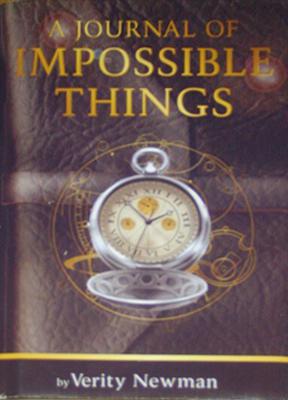 May 1995. Long ago in an English spring. It’s over five years since Survival. The belief that the show might return sometime soon is fading. Since the celebrations of 1993, the BBC seems to have cooled towards the show. BBC2’s repeats finished in March with Pyramids of Mars, and only viewers with satellite TV channel UK Gold could see past adventures. In the absence of any positive noise from the BBC, some fans have responded by making their own, copyright-skirting videos – Shakedown and Downtime. By the end of 1995, the real reason for the BBC’s quiet will become clear.
In the meantime, Virgin’s New Adventures are in their imperial phase. Ace has been written out, this time for good, in February’s Set Piece, and there is even talk of regenerating the seventh Doctor into a new incarnation “played” by David Troughton – an idea ultimately nixed by the BBC, which has other plans.
Still, by hiring ‘name’ writers, refusing to be tied to the cast of the old series, and publicly declaring themselves the one true continuation of Doctor Who, the New Adventures pretty much became just that. Luckily, a significant proportion of the books are actually good enough to justify this presumption, and none more so than Human Nature: the only ‘tie-in’ story so unmissable it was remade for TV, in 2007 (Dalek, Rise of the Cybermen and Planet of the Dead were inspired by elements in Jubilee, Spare Parts and The Highest Science – but Human Nature is a straight-up adaptation).
Basically, by 1995 the New Adventures were churning out Doctor Who stories good enough to be remade 10 years later. A comparison of the novel and TV versions of Human Nature shows them to be remarkably similar: many of the differences are of context, rather than content. Paul Cornell himself points this out in his introduction to the novel’s 2015 reissue. The previous New Adventure, Sanctuary, was the books’ first ‘pure historical’: a reimagining of The Massacre with Bernice and Guy de Carnac standing in for Steven and Anne Chaplet. This – plus the fact that they’re interesting to Cornell – helps explain Human Nature’s themes of sacrifice, loves and lives chewed up in the grand sweep of history. The novel concludes ‘that’s the thing about time, its like a big story and its never over’ – a vast universal narrative in which we’re all just characters appearing for a few scenes, and only the Doctor can dip in and out of other pages.
The novel is also about core principles: the heroic characters, even the unbending headmaster Rocastle, are ultimately defined by (and often willing to sacrifice themselves for) their principles. In contrast, the Aubertides (the novel’s ‘Family of Blood’) are superficial, unprincipled creatures, lacking any morality at all. This dwelling on principles is key because the book is maybe the ultimate articulation of the theme that haunts all of Cornell’s books, summed up in Terrance Dicks’ description of the Doctor:
Much has changed about the Doctor over the years but much has remained the same. Despite the superficial differences in appearance, at heart, or rather at hearts (the Doctor has two) his character is remarkably consistent.
He is still impulsive, idealistic, ready to risk his life for a worthy cause. He still hates tyranny and oppression and anything that is anti-life. He never gives in and he never gives up, however overwhelming the odds against him.
The Doctor believes in good and fights evil. Though often caught up in violent situations, he is a man of peace. He is never cruel or cowardly.
In fact, to put it simply, the Doctor is a hero. These days there aren’t so many of them around.
All of the above is present in the TV version, although Russell T Davies adds his own flourish to the description of the Doctor:
He’s like fire and ice and rage. He’s like the night and the storm in the heart of the sun. He’s ancient and forever. He burns at the centre of time and he can see the turn of the universe. And he’s wonderful.
The TV version also adds a new theme not greatly present in the book: the ambivalence that haunts the revival:
The Doctor might be wonderful, but thinking back, I was having such a special time. Just for a bit. I had this nice little gang, and they were destroyed. It’s not his fault, but maybe that’s what happens if you touch the Doctor. Even for a second. I keep thinking of Rose and Jackie. And how much longer before they pay the price.
Elton Pope’s words echo in Joan Redfern’s final question: ‘If the Doctor had never visited us, if he’d never chosen this place on a whim, would anybody here have died?’
The equivalent scene in the novel is equally heart-wrenching, Joan is fundamentally the same character, a prim Edwardian able to maintain a stiff upper lip when faced with ‘two hearts but no love’. In both, her brusque dismissal of the alien Doctor precludes any further discussion.
Essentially, the changes are cosmetic. Human Nature points the way forward for stories that, in contrast to the classic series, are unambiguously about the nature of the Doctor, echoing through the oldest question, ‘Doctor who?’, and the twelfth Doctor asking ‘Am I good man?’
In Human Nature, John Smith is given to asking himself similar questions about his nature, ‘For what season or circumstance was I built.’ He also ponders that his appendix feels newly made – no problem with the colour of the kidneys, though. Once you know (from Cornell’s foreword) that Steven Moffat had a hand in these diary entries, you can’t help but look for hints of the future, of what these writers are eventually going to do. The seeds of Rose were in Survival, but the roots are in the New Adventures.
So by 1995 the books have given us Paul Cornell, Gareth Roberts, Mark Gatiss and now Steven Moffat. How could they possibly be more of a lead in to 2005?
Next Time: ‘When you’re a kid, they tell you it’s all, grow up, get a job, get married, get a house, have a kid, and that’s it. But the truth is, the world is so much stranger than that. It’s so much darker, and so much madder. And so much better’ – Damaged Goods
1994: Tragedy Day
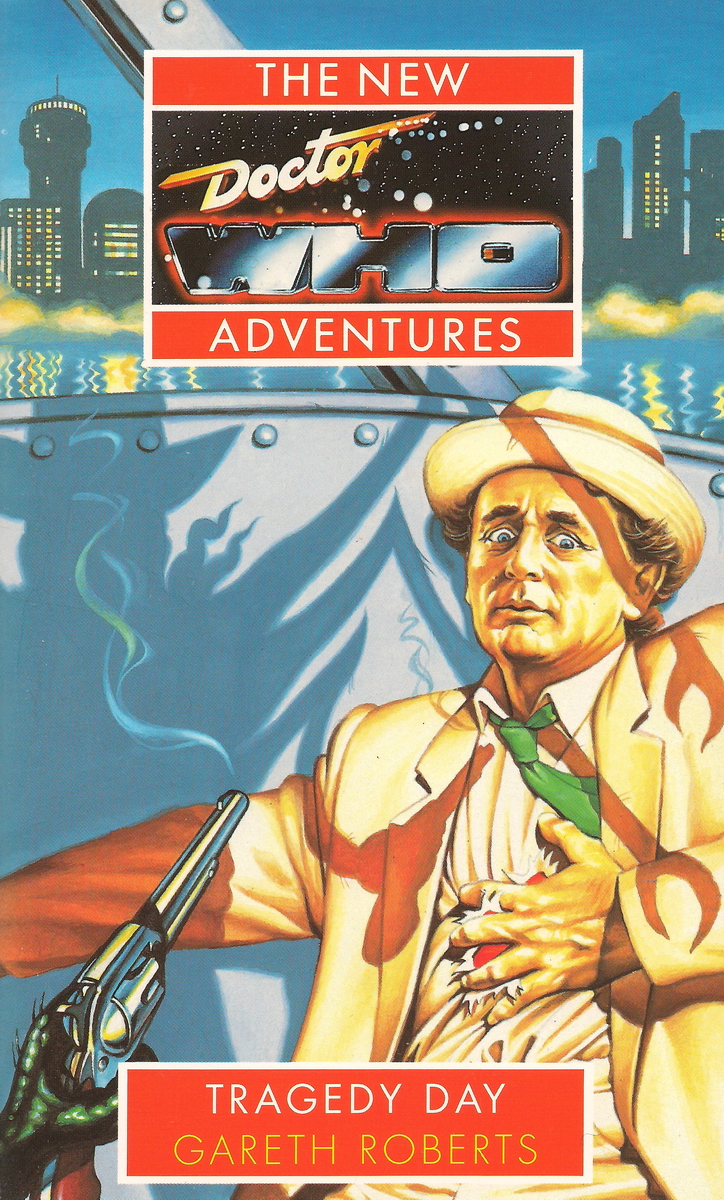 March 1994. Given this is well into the ‘Wilderness Years’ the previous 12 months have been a boom for Doctor Who with brand new episodes airing on BBC1 (watched by over 13 million viewers) and BBC Radio 5 to mark the thirtieth anniversary. Also, the conclusion of two years of repeats on BBC2, plus substantial documentaries on TV and radio – 30 Years in the TARDIS and Doctor Who: 30 Years. More ominously, and perhaps most representative of the legacy of 1993, there’s been a special edition of The Antiques Roadshow, a reminder that Doctor Who itself was becoming a relic. Before 1993, past Doctors only turned up for repeat seasons, anniversaries or one-offs; afterwards they were ever present.
Meanwhile, in the 10 novels published since Deceit, the New Adventures have continued to plough their own furrow. The ‘future history cycle’ concluded in Lucifer Rising in May, and to acknowledge the thirtieth anniversary Virgin published five ‘alternate history’ novels that revived “classic” monsters and villains such as the Silurians, the Vardans, the Master of the Land of Fiction and the Meddling Monk. These idiosyncratic choices are reflective of Virgin’s uncomfortable relationship with the series’ past. In the afterword to Deceit, Peter Darvill-Evans had gone on record as saying he disliked looking backwards. But the explosion of celebratory nostalgia in 1993 – and, perhaps, the realization that there was lots of money to be made from revisiting the past – overrode the principle that the New Adventures should carry forward Doctor Who single-handedly, or that, ‘if we spend time looking into the past of our favourite television series, we can hardly blame the BBC for failing to look to its future.’
Launching in July 1994, Virgin’s Missing Adventures set the precedent for an ongoing series of ‘Past Doctor Adventures’ that was continued by BBC Books in 1997, and ultimately by Big Finish since 1999. Arguably, the subsequent dilution of writing talent across multiple ranges was damaging to overall quality in the long run, but the immediate impact seems to have been a change in direction, and an upping of the game, for the New Adventures. After all, it wouldn’t do for the past to overshadow the present, or the future.
That said, there were casualties: the biggest loss being Gareth Roberts, whose Tragedy Day is practically a soft re-launch for the New Adventures, and who, with a single exception, now departs the main range for the Missing Adventures. As one of the regular writers of the 2005 revival, Roberts’ novels are particularly interesting because they show the evolution of his writing style. What’s fascinating is that even in 1994, after only one previous book (1993’s The Highest Science) he’s already been pegged as ‘the funny one’, a tag he still carries in 2015. The Unicorn and the Wasp is the ‘comedy’ episode that breaks up what could otherwise be a pretty grim fourth series; The Lodger and Closing Time are light-hearted interludes before their respective season finales.
So, Roberts is the man you bring in when you need to lighten the tone. And in March 1994, the tone of the New Adventures definitely needed lightening. Since the War Ace arrived in Deceit, the seventh Doctor’s TARDIS crew has been at each others’ throats: mistrustful and angry. One of the undercurrents in the ‘alternate history’ cycle is the team falling apart, losing faith in each other and generally having a pretty miserable time. This was directly addressed and apparently resolved in the previous novel, Paul Cornell’s No Future – but given Doctor Who’s past form at actually paying off resolutions (cf. The Armageddon Factor; The Trial of a Time Lord), readers might have been forgiven for thinking ‘gritty’ and ‘grim’ were going to be the constant watchwords for the New Adventures.
Which means it’s a genuine pleasure when Tragedy Day turns out to be a sprawling, messy satire that pokes fun at practically every aspect of 1990s life (because its setting, the planet Olleril, is a cultural echo of Twentieth Century Earth). Roberts’ most popular novels, his fourth Doctor and second Romana Missing Adventures, explicitly align themselves to Douglas Adams’ Doctor Who, but Tragedy Day is unmistakeably cut from the same cloth, with the same mix of absurd bathos, ridiculous juxtapositions (Ernie the arachnid assassin, the Celebroids, and monsters called the Slaags) and deliberate damp squib revelations that only highlight the pathetic pretentions of galactic dictators.
Best of all, Tragedy Day was genuinely a new start for the New Adventures. With Rebecca Levene gradually taking over editorial duties from Peter Darvill-Evans, the books became generally less uptight. They could ‘keep the flame burning’ without having to aggressively shun the past. Later in 1994, readers got sequels to both The Monster of Peladon and State of Decay, and the return of the Master. Drama wasn’t generated by the antagonism between Ace, Bernice and the Doctor, but by external menaces. It’s not surprising that this is by and large the books’ most fondly remembered ‘era’ – the one Big Finish revisited in The Shadow of the Scourge, and DWM chose to celebrate (and poke fun at) in their New Adventures tenth anniversary comic strip The Last Word (written by Gareth Roberts).
The New Adventures’ ability to gracefully and convincingly reinvent themselves in 1994 – before Darvill-Evans’ approach had run out of steam – shows they were genuinely worthy successors to the TV series. When BBC Books tried to pull off the same trick in 1999, in response to competition from Big Finish, the Eighth Doctor Adventures floundered and never regained their momentum. Conversely, the New Adventures went from strength to strength, producing, in 1995, one of the all-time classic Doctor Who stories.
Next Time: ‘No, it’s not just a story, no. Every word of it’s true. I found my great grandmother’s diary in the loft, and she was a nurse in 1913, and she fell in love with this man called John Smith. Except he was a visitor from another world. She fell in love with a man from the stars. And she wrote it all down.’ – Human Nature
1993: Deceit
 April 1993: the 30th Anniversary year of Doctor Who. Although the show has been off the air for three and a half years, it is still fresh in people’s minds thanks to an ongoing series of BBC2 repeats (which have just reached Battlefield), and regular press speculation about a comeback on the big or small screens. Pertwee, Davison, Colin Baker and McCoy have just promoted a significant package of BBC Video and Audio releases for the anniversary, and BBC Enterprises confirm a script has been prepared for a special episode. The speculation will reach fruition in November, when a 3D anniversary story, Dimensions in Time, airs as part of Children In Need (with the show’s first Radio Times cover since 1983). In 1993, Doctor Who is therefore by no means a ‘niche’ or ‘cult’ show.
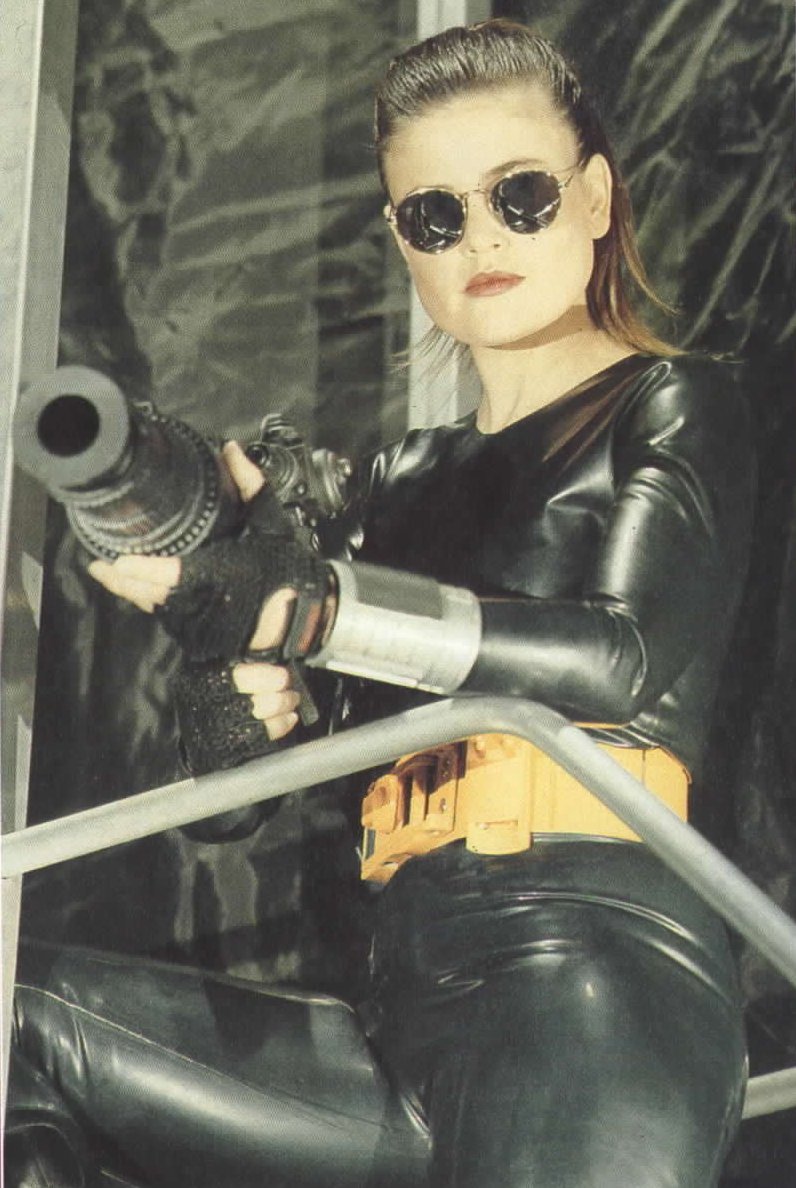
Meanwhile, since Love and War was published in October, there have been three further New Adventures featuring the new team of the seventh Doctor and Bernice, and the series has moved from bi-monthly to monthly publication in time for the anniversary celebrations. The second most notable thing about the April release, Deceit, is that it brings back Ace – several years older – as a battle-hardened space marine and Dalek hunter. While Tegan left and came back in consecutive episodes, and we visited the Brigadier at various points after the 1970s, this is the first time a companion has re-joined after their leaving story. New Adventures editor (and the writer of Deceit) Peter Darvill-Evans has taken the opportunity to reformat the character as an actively unwilling participant in the Doctor’s schemes: an unpredictable third wheel in the TARDIS crew to shake up the potentially too-cosy new pairing. Fans imaginatively nicknamed this version of Ace ‘new Ace’, but in a kiss to the future I’m going to call her ‘the War Ace’
In theory, the War Ace adds an interesting new dynamic for the books to explore – and it’s notable that both the New Adventures and the later Eighth Doctor Adventures prefer having two companions rather than one to provide more opportunities for drama. In practice, it takes several, slightly brutal, months of ‘future history cycle’ novels for the War Ace to really work. There aren’t many readers who’d pick the 12-month run between Love and War and Blood Heat as the highlight of the New Adventures. And given I suggested in the last entry that Darvill-Evan’s courage in writing out one of the TV regulars gave the books additional freedom and legitimacy, you might very well wonder why he brought Ace back so soon, and why he made her so unlike (and, initially, unlikeable) the screen version.
I think the answer comes at the end of Deceit, in the most notable thing about the book. It features a relatively lengthy essay that lays out Darvill-Evans views of the New Adventures, his scepticism about doing (still unannounced) ‘Missing Adventures’, the nature of time travel in the Doctor Who universe and the state of Doctor Who in general. And it’s an extraordinary, ambitious manifesto. In it, Darvill-Evans states that:
‘The New Adventures are not intended to be a support for the TV series, or a temporary substitute for it: we may never see Doctor Who on network television again, and in that case the New Adventures have to be ready to take most of the strain of pulling Doctor Who forwards.’
Given the introduction to this post, and the context of 1993, that’s an unusually pessimistic view. A significant chunk of people expected Doctor Who to be back on television within a few years – and as it happens, they were right. But Darvill-Evans has set out his stall: the New Adventures are unambiguously the continuation of Doctor Who in the 1990s. That view gained support when Doctor Who Magazine began to preview upcoming New Adventures in the same way it previews new TV episodes today, and its comic strip explicitly tied in to Virgin continuity. In a very real sense, Darvill-Evans was right: the New Adventures matter in a way no other Doctor Who spin-offs (with the exception of the Big Finish Paul McGann audios) matter. Russell T Davies, Steven Moffat, Mark Gatiss, Paul Cornell and Gareth Roberts all began their professional Doctor Who writing careers with work for Virgin’s seventh Doctor. But it’s not only because of the calibre of writers Darvill-Evans cultivated. It’s because, in the early 1990s, he publicly stated that he was the de facto producer of Doctor Who, and by taking the mandate he pretty much made it happen.
But Darvill-Evans was also very conscious that Virgin merely held the licence, and he had a second aim with the New Adventures: to create a shared SF universe that could endure even if he lost the Doctor Who mandate. This is explicitly the purpose behind the ‘future history cycle’ – an attempt to sketch out a vision of the galaxy in the middle of the third millennium, of an expanding Earth Empire beholden to massive corporations and threatened by powerful forces, many of which lurked in cyberspace. This is the time period that’s home to Bernice and later companions Roz and Chris. In some respects it presages Russell T Davies’ Satellite 5 or Year Five Billion eras – a familiar but non-contemporary backdrop.
So the point in introducing the War Ace is that the New Adventures now have a character that slots perfectly into the kind of Aliens-style space adventures Darvill-Evans wants to tell, picking up the action sequences and freeing up the Doctor to flit, mysteriously, at the edges while Bernice fulfils the more traditional companion role, while also, often via diary entries, offering a sardonic commentary for the readers. In theory, Darvill-Evans believed this ‘future history’ could endure beyond the Doctor. And in fact it did: Virgin’s New Adventures continued, with Bernice as the lead, for two and a half years beyond the loss of the Doctor Who licence. And by the time the books ended, Big Finish had already started their own run of Bernice Summerfield stories, set in the same era. Of course, these plays begat the Big Finish Doctor Who audios, and a house style that even, in 2015, owes a heavy debt to Darvill-Evans’ future history cycle – plays like Nick Briggs’ Fourth Doctor Adventures or the Dark Eyes boxsets have more than a hint of the New Adventures about them.
And so Deceit, while only partly successful as a novel, remains an enduringly influential Doctor Who story. As Darvill-Evans’ most overt attempt at a manifesto for the series, a ‘house style’ every bit as distinctive as Letts’ Yeti-on-the-loo or Moffat’s dark fairytales, it’s perhaps the seminal New Adventure.
Next Time: ‘It’s a very dangerous book and I have been very careless. It is the key to Shada’ – Tragedy Day
1992: Love and War
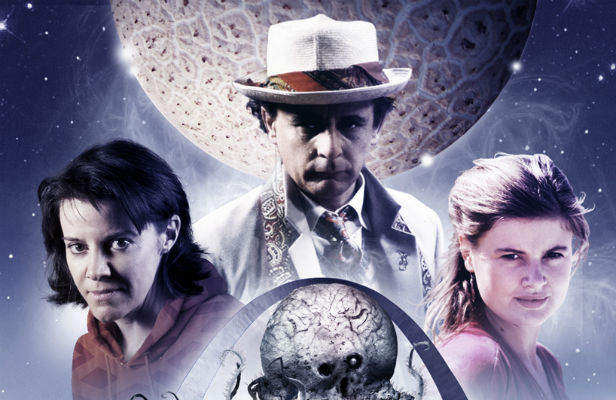 This entry expands on a review of the audio adaptation, originally written for Doctor Who Magazine in 2012
October 1992: Doctor Who has now been off the TV screens for three years, although there are persistent rumours of a film or new series in the pipeline, and plans are afoot for a 30th anniversary special, The Dark Dimension. The BBC has also embarked on the biggest series of repeats since 1982’s Five Faces season, with one story from each Doctor (and two for Pertwee) airing on BBC2 between January 1992 and May 1993. At this stage in ‘the Wilderness Years’, then, the show is still on terrestrial TV, and people are actively planning to get a new series, movie or at least a straight-to-video special made.
And rather than playing it safe during this period of uncertainty, sticking with the familiar TV team of the seventh Doctor and Ace, Virgin decides to radically overhaul the New Adventures, exiting one of the lead characters and replacing her with a new, novels-only companion. Professor Bernice Summerfield must surely be the most important Doctor Who character never to have appeared on TV – having appeared in 22 years and growing of novels, audios, comic strips and short stories. She is by far the New Adventures‘ most significant addition to the canon, and in many ways is the reason why the Big Finish audios exist. When Looms, and the Other and the Adjudicators are barely-remembered footnotes, Bernice is still a living, breathing part of Doctor Who continuity. Not least because she went on to appear in 45 of the remaining 52 New Adventures, making her the most prolific companion to date.
Partly this is because she arrives at precisely the right moment, when Virgin has done pretty much all it can with the Season 25/26 TV set-up. In Love and War, the Doctor and Ace join up with a band of space travellers on the cemetery planet Heaven, where they have to battle an attempt by the fungal Hoothi to infest the dead and conquer all of time and space. As usual, the Doctor has allowed his tendency for secretive forward planning to override his better judgement. As the story unfolds Ace falls in love with one of the travellers. This threatens to drive a wedge between the two of them that could drive them apart forever. Yadda yadda yadda. We’ve seen the same basic scenario playing out in various permutations since Remembrance of the Daleks – most recently in Mark Gatiss’ first Doctor Who story, Nightshade – and we know exactly how it pans out. Ace is furious with the Doctor, he makes a halting, heartfelt apology. Ace gets over it and they saunter off into the bushes.
Paul Cornell’s genius is to take this plot, and make it really matter in a way no-one has before. This time, the Doctor really does go too far. Ace really is heartbroken. Their split really does seem permanent. This seems necessary – in the TV series all the Doctor’s tests were supposed to be leading up to Ace becoming a Time Lady, a kind of baptism of fire that would prove she had what it took to go to the Gallifrey Academy. In retrospect this has a slight whiff of patronising paternalism about it (and notably, Cartmel and Aaronovitch changed it when they came to write the ‘Season 27 Lost Stories’ 20 years later). Instead, Cornell punishes the Doctor for his presumption. His manipulation is not ok, the end doesn’t justify the means, and he can’t just use his friends as pawns. Love and War is the kind of self-correction that the TV series occasionally did (cf. Steven in The Massacre or Tegan in Resurrection of the Daleks), but followed through to a more devastating conclusion.
That’s where Bernice comes in – at this Doctor’s lowest moment, when he’s saved the universe but lost his best friend. Like Donna Noble 15 years later, she’s brittle and spiky, refusing to be patronised or manipulated. Like Donna, at the moment when the Doctor is at risk of losing himself completely, she reminds him of who he is, and why he fights. And like Donna, she buries the angst under layers of fun. No wonder readers embraced her.
Love and War is Virgin’s most important novel. Not only because it’s a better pay-off to the Doctor and Ace’s relationship than the planned Season 27, but because it enabled the books to free themselves from the constraints of the TV series and genuinely go off to tell stories ‘too broad and too deep’ for the small screen.
Next Time: ‘I don’t suppose there’s a need for a doctor any more. Make me a warrior now’ Ace returns – in Deceit.
1991: Timewyrm: Exodus
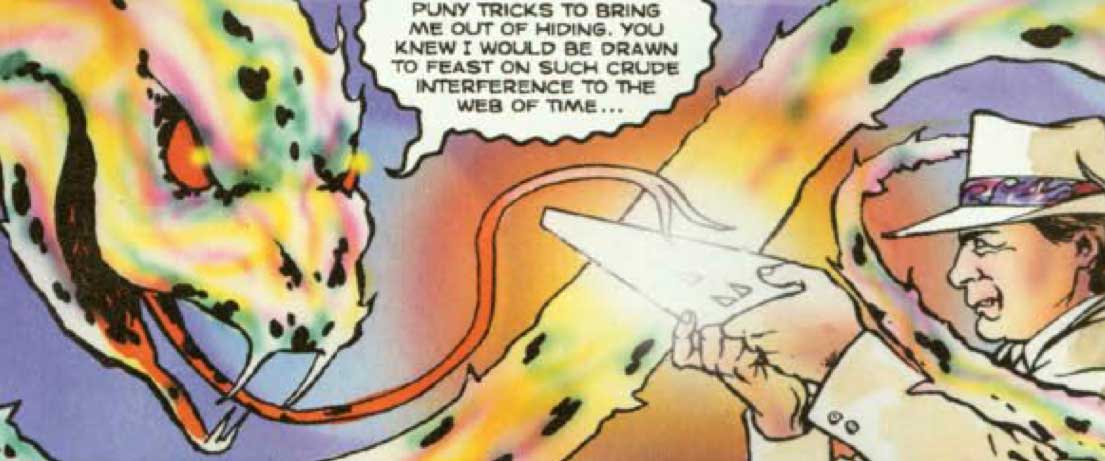 August 1991. In the 18-month hiatus between Survival and Timewyrm: Genesys, the world has turned upside down. The West intervenes to end Iraq’s invasion of Kuwait, although the failure to bring the man responsible, Saddam Hussein, to justice has consequences we’re still dealing with. Meanwhile, in the East the Warsaw Pact is officially dissolved, and, despite a last-ditch attempt to preserve it in August 1991 the Soviet Union breaks up. And Germany finally gains its independence from the occupying Allied powers.
While in Doctor Who, the second New Adventure is published. The consensus view is that the first was a bit of a disaster, with a deeply suspect attitude towards women, bare breasts, underage sex and an author who at best seems deeply ambivalent about the seventh Doctor and Ace, and would clearly prefer to be writing an adventure for Jon Pertwee or Tom Baker.
Timewyrm: Exodus, on the other hand, is generally regarded as a slightly surprising success. Slightly surprising, because by the 1990s a lot of Doctor Who fans would have been sympathetic to the view that Terrance Dicks had gone a bit off the boil. He’d last written for the TV series eight years before, and although he kept writing novelisations almost to the end, even those, simple re-tellings of the TV stories, drew some unfavourable comparisons with the expanded, experimental books that Target started to put out in the 1980s. While Ben Aaronovitch was introducing new scenes and hints of the wider “Cartmel Masterplan” in his own novel of Remembrance of the Daleks, Dicks was pumping out a straightforward adaptation of Planet of Giants.
That said, Dicks was, and is, probably the safest pair of hands in Doctor Who’s history. Virgin were pitching the New Adventures not only as the continuation of the TV series, but also as a replacement for the Target novelisations which had reached a natural end in July 1991 with the publication of Battlefield, so it made perfect sense to bring Dicks in early to help smooth the transition and get people onside, like sticking Status Quo on to open Live Aid.
And rather than turning in a safe book, Dicks not only gives us the first Doctor Who changed history story (there are many, many more of those to come, but this is the original), but goes right for the big one: what if Germany had defeated Britain and won the Second World War? Not only that, this isn’t just about some Nazis. These are Hitler, and Himmler, and Goering and all their insane beliefs.
The Nazis haunted the Sylvester McCoy TV stories, so we got pseudo-Nazis and alien Nazis in Remembrance of the Daleks, neo-Nazis in Silver Nemesis and Nazi paraphernalia in The Curse of Fenric. But until Timewyrm: Exodus, the series hadn’t actually tackled the Nazis themselves. In that sense, the book feels like a natural progression from the last couple of years of the TV series. What’s interesting about Timewyrm: Exodus is that Dicks doesn’t simply portray the Nazis as monsters, although he makes it clear they are. Instead, he confronts the seductive power of Nazism. True, he does this partly by having Hitler inherit the hypnotic powers of a time-travelling alien goddess. However, less crassly, he shows us a potential future where Great Britain succumbed to Nazism, and, in the book’s strongest moment, even has Ace experience the pleasure that comes from imposing her own views on others.
Opening the book at an alternative Festival of Britain – a vision of the early 1950s that’s both a million miles away from the pomp and circumstance of Elizabeth II’s coronation, and yet still haunted by the fall-out from the Second World War – is masterful. The British community is recognisable, but the emphasis is horribly changed. Instead of Cockney bovver boys causing trouble, these young thugs have been co-opted into the British Free Corps, and their casual cruelty turned against their fellow citizens. And as most English people prefer to just get on with it without making too much fuss, the implication is that a decade after the German victory most people have learned to live with the new regime, the police won’t intervene if the Free Corps are involved and the resistance is an irritation.
This is chilling – as is Ace’s reaction to the Doctor’s convincing impersonation of a Nazi officer, which he puts on to stop a couple of Free Corps thugs threatening a Jewish stallholder. Ace is delighted at the Doctor’s show of strength, and the subsequent exchange is worth quoting:
The Doctor gave her one of his enigmatic looks. “Enjoyed it, did you?”
“Yeah, why not?”
“So did I,” said the Doctor. “That sort of thing gets enjoyable very quickly. We scared the man at the tea-stall too – did you enjoy that?”
“All right, I get the point.”
In that exchange, which is early in the book, Terrance Dicks – writing his first seventh Doctor adventure – nails the character so well you can hear McCoy saying the lines, quizzing Ace, testing her. What’s more, he captures one of the reasons Nazism was so appealing, why so many young people joined organisations like the SA and the Blackshirts, directly and straightforwardly.
The rest of the book plays out with similarly straightforward, punchy prose. Timewyrm: Exodus is a brisk read, showing off Dicks’ strengths as a storyteller and an unfussy writer – everything he’s learned both about Doctor Who and about writing accessible, enjoyable novels is poured into this. The result is one of the genuine triumphs of the New Adventures – a novel that’s as pacey as a McCoy era TV story and as readable as a Target novelisation. Dicks even introduces a new signature style – introducing one of his own old villains, the War Chief, in a move that would be self-indulgent if only it didn’t appeal so irresistibly to the fan gene, and reconciling the TV series and the books for those fans wavering about accepting the New Adventures. Later, he re-uses the Vampires, Borusa, the Raston Warrior Robot, the Rutans and Morbius so that every one of his TV episodes has its own sequel. Plus, in its own way, this is Terrance Dicks’ most important Doctor Who work since The War Games so the re-use of the War Chief is entirely appropriate.
The War Chief is just one element though – along with Nazis, zombies, plus the Timewyrm herself. There’s a sense that Dicks really let rip here, and the result is intoxicatingly insane. In a book range that’s trying to both pick up where Target left off, and become the primary continuation of a defunct TV series, something like Timewyrm: Exodus is almost exactly the kind of thing you need to.
When Joss Whedon decided to continue Buffy the Vampire Slayer as a series of comics he promised that it was going to be “conceptually bigger and more fantastical” than the TV series, able to achieve things on a scale that would have been impossible on a budget. Terrance Dicks does exactly the same thing in Timewyrm: Exodus – a recognisable Doctor Who story that’s grander and more epic than anything the TV show could have delivered had it still been going in 1991. It worked – this is still one of the best-loved New Adventures, and deservedly so. Though later novels were more obviously ground-breaking, Timewyrm: Exodus kick started the range, just like second TV story kick started the series: this is The Daleks of the 1990s – a book that showed what “too broad and too deep for the small screen” actually meant in practice.
But Dicks was about to be superseded by a new writer, one whose work not only defined the New Adventures, but won him a place as the earliest Doctor Who author to write for the new series…
Next Time: “The Doctor’s soul is revealed. See him. See the heart of him. The man who abhors violence, never carrying a gun. But this is the truth, Doctor. You take ordinary people and you fashion them into weapons.” Love and War.
1990
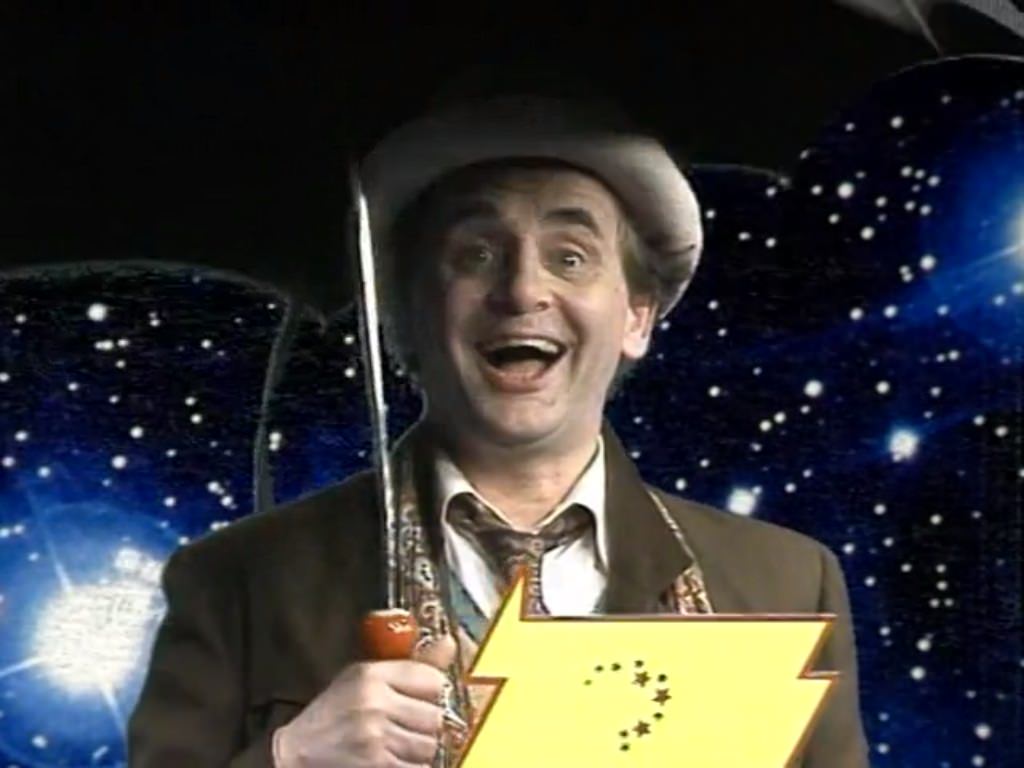 1990. After a decade in retreat, the British left wing seems to be rising. 200,000 protestors riot in London against the introduction of the Poll Tax. The UK slips into a recession, and against an apparently inexorable rise in Labour’s opinion poll ratings, Margaret Thatcher is finally deposed by her own cabinet. The moment Andrew Cartmel and his stable of writers have been hoping for for the last three years finally comes to pass.
But Doctor Who isn’t about to witness it. Because for the first time since 1962, there is no new Doctor Who on TV. Which is a blessing and a curse for this blog. A blessing, because to cover one story a year from 1963 to 2013 would technically have meant I’d end up with 51 stories, and 1990’s wilderness year is therefore a good way to reflect the break between Survival and Timewyrm: Genesys, and stick to the 50 story limit. And a curse, because I’m a Doctor Who fan and therefore a completest, and the idea of having no entry at all for 1990 is therefore unthinkable.
The thing is, from one point of view 1990 really is the wilderness year. It was the year when it became obvious the show wasn’t coming back any time soon. Apart from the ever-reliable Doctor Who Magazine comic strip and the tail end of the Target novelisations, about the only new stories put out in 1990 were the Abslom Daak: Dalek Killer comic book, Mission to Magnus (the last of the novelised ‘lost stories’ from the aborted 1986 series) and Search Out Space, in which the seventh Doctor, Ace and K9 battle the Celestial Toymaker in the form of sinister man-child Cedric, possibly.
As for me, by 1990 I was 10 years old and definitely a Doctor Who fan. No trip to Worcester was complete without a visit to WH Smith and 75p on a Target novelisation. The first time I ever ordered a book was The Daleks’ Master Plan Part I: Mission to the Unknown (Smiths in Worcester only had Part II: The Mutation of Time). I’d been an avid reader of the novelisations since the mid-1980s. Terrance Dicks was my JK Rowling. I was always faintly disappointed that in my primary school library the only Doctor Who book they had was Full Circle by Andrew Smith. I, on the other hand, had piles of Target novelisations – the lists of “also available” books that made up the endpapers of every Target release were carefully ticked, and I was always on the look out to plug any gaps. Preparing for a school trip to Switzerland, my parents took me to the Kingfisher Shopping Centre in Redditch where along with a shell suit (oh, the humanity) and toiletries I bought the novelisations of Planet of Giants, The Space Pirates and Remembrance of the Daleks.
I really can’t overstate how much I adored the Target novels. I always had at least one on loan from Pershore Library, and it was a red letter day whenever I found one withdrawn from stock and on sale for 10p. For my 7th or 8th birthday I’d received Doctor Who and the Tomb of the Cybermen (a particular favourite). For my 9th birthday, my parents took me to Hay-on-Wye and I spent all my birthday money buying up novelisations of mysterious stories like The Awakening and Doctor Who and the Sea Devils. Basically, I really loved the books. And I guess there must have been thousands of people just like me, for whom Doctor Who was largely experienced as a series of books, occasionally interspersed with a TV programme – meaning that continuing the Doctor’s adventures in print was, if not ideal, then entirely reasonable and congruous with the way fans had been following the show since the mid-1970s.
Which means I should have been queuing up for my copy of Timewyrm: Genesys when the New Adventures launched in June 1991. Sadly, though, I just looked on this interloper novel (not on any of the story lists in any of the novelisations) with suspicion. It looked dauntingly long compared to most of the novelisations, and the blurb made it all sound a bit wearisome. And so, when the Target novelisations dried up, so did my interest in Doctor Who, for a couple of years anyway. I didn’t read a New Adventure until 1995. At which point, probably having reached the target age for the Virgin books, I fell in love with the series all over again and bought up almost all of them from a remaindered bookstore, called Bookends, in Worcester – I was lucky that my renewed interest happened to coincide with Virgin losing the licence to do the books, and therefore I think I hit jackpot – picking up rare releases like The Dying Days, So Vile a Sin and Lungbarrow for £2.95.
So, for me 1990 was very much business as usual, even with no TV show. And after 1995, the TV movie came along, and then I was there for the kick-off of the BBC eighth Doctor books, the Big Finish audios and, ultimately, the new series. But, all that’s in the future. In the meantime, let’s see. You’ve got a time machine; I’ve got a gun. What the hell. Let’s kill Hitler.
Next Time: “What did he mean, we saved his life? We could not have just saved Hitler.” Timewyrm: Exodus.
1989: Survival
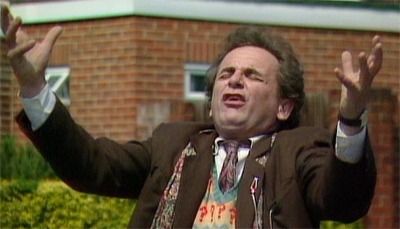 December 1989. The end of a decade; the end of an era. On 23rd November, Sir Anthony Meyer challenged Margaret Thatcher for the leadership of the Conservative Party, taking another step towards Tory matricide. On 3rd December, in the aftermath of the Berlin Wall’s fall, Thatcher, George Bush and Mikhail Gorbachev declared that the Cold War was over. And on 6th December 1989, at 7:59pm, Doctor Who ended.
It wasn’t a spectacular death. There were no announcements, no grand finale like Blake’s 7’s final massacre. We never saw the body.
Even in 2013, it’s hard to watch Survival without being acutely aware that, until 2005, for most people this was the last-ever story. Of the five million that tuned in to Part Three, only a tiny fraction, maybe one per cent, followed Doctor Who through the long 1990s. Twice as many tuned in for the TV movie in 1996, but the McGann film doesn’t have the same melancholy overtones as Survival – it was a false start, rather than an ending.
The thing is, unlike Logopolis, these overtones only exist in the heads of fans. Or maybe only in the head of this fan. Survival wasn’t even written as the last story of Season 26, and certainly not as the last-ever Doctor Who. Apart from the tacked-on monologue that was recorded months after the rest of the story, there’s nothing here that eulogises Doctor Who, or does things that only a final episode can do. Rona Munro just gets on and tells the story she wants to tell, blissfully unaware that it’s the last story this show will ever tell.
And what a story. Over the McCoy era, I think there is a general upwards trend in quality. Time and the Rani is by far the worst seventh Doctor episode, but even that’s on an upward trajectory from the show’s lowest point in 1986. Season 25 is a marked improvement, and Season 26 is one of the strongest ever. The Curse of Fenric is a fantastic synthesis of everything that’s great about Hinchcliffe Gothic, mixed with a healthy dose of Cartmellian social politics. Then we get to Survival.
The first thing to note about this is the one everyone since 2005 has noticed: this is the first ever Doctor Who story that takes place in suburbia, in the living rooms and the front gardens of London. The TARDIS lands at the end of a nondescript street, the Doctor hunts alien predators across the pavements and behind the privet hedges as curtains twitch and the Neighbourhood Watch worries. The Master invades a council flat. The Doctor goes shopping at the local supermarket. This goes beyond Yetis in the Underground and Autons on the High Street: Doctor Who has invaded the sitting rooms of Zone 4, taken over the kids’ adventure playground. The first new series story they made, Aliens of London, has a companion returning home for the first time to discover she’s a missing person, it has a monster invading a council flat and sly digs at the current government.
There is a direct, unbroken link between Survival and the 2005 series, over and above any of the innovations that are going to come from the New Adventures or the Big Finish audios. It would be perfectly feasible to jump from this to Rose and ignore everything that came in between – which is exactly what most people did. The fact that John Nathan-Turner, Alan Wareing, Andrew Cartmel and Rona Munro got in an Eccleston story 16 years early is utterly remarkable.
Because this feels more like an Eccleston story than anything else: it’s angry, edgy. Rona Munro wanted to attack the savage, tribal politics of the 1980s – the politics that generated statements like “greed is good” and “there’s no such thing as society”. Paterson talks about “survival of the fittest” and “self defence” (with the emphasis very much on the self). He talks about kids having to “fight or go under” as though they’re small businesses. Hale and Pace make the same points in their little shop, and McCoy, apparently improvising the Doctor’s response, comes up with one of the best lines of the story – even if you manage to out-run your friend, saving your own skin while the chasing lion eats them, “What happens when the next lion comes along?” The first episode sets up all these ideas, and is crammed with beautiful details like the hunt saboteurs tin that Ange rattles at Ace, the run-down youth club suggesting the Tory government’s abandonment of the young.
Then the second episode, predominantly set on the Cheetah Planet, shows the consequences of a society of dog eat dog (or whatever). The Master makes the point that the planet has been torn apart by the savagery of its inhabitants, and it’s infectious – not even a Time Lord can fight against a society that’s institutionalised violence. The quarry used the previous year to record The Greatest Show in the Galaxy is suitably alien, by all accounts baking hot. It looks hostile, and like a believable environment, with valleys, lakes, wooded areas and ruins. There’s a sense of scale you don’t often get in classic Doctor Who.
The third episode returns to Earth for the show-down. It’s probably the weakest of the three, largely because the duelling motorcycles feels like a stunt tacked on to provide an unnecessary explosion to the climax. The real climax comes when Ace and the Doctor reject the violence on both planets – “If we fight like animals, we die like animals!”
In Ace’s case, this not only provides a moral to the story, but also is an important moment for her character. Season 26 is largely a story about Ace growing up and overcoming her demons including her relationship with her mother and memories of the racist attack that’s haunted her for years. Going from a delinquent who brews home-made explosives to a young woman who recognises that most important problems can’t be solved by blowing them up, the Ace of Survival isn’t a kid any more. One of the great missed opportunities of the New Adventures and the Big Finish audios is that they generally fixate on the Ace of Battlefield and not the Ace of Survival. The character development of Ace and the performance of Sophie Aldred are two of the great joys of the McCoy years, and another precursor to the 2005 series and Rose’s growth from shop assistant to Bad Wolf, Martha’s journey from student to revolutionary and Donna’s from squawking harpy to the most important woman in the universe.
The use of the Master is interesting: he seems more of a distraction to the Doctor than a real threat to be dealt with. “Survival is what he lives for” says the Doctor at one point. Given the Master’s downward trajectory from galactic master criminal, to decrepit psychopath clinging to life, to a villain openly mocked by the Rani and playing second fiddle to the Valeyard, the last few years haven’t been auspicious. Survival doesn’t exactly restore dignity to the character – quite hard when he’s transforming into a feral beast – but Munro does pick up on the Ainley Master’s occasional savagery, and uses that to make him nastier than he’s been at any point since Castrovalva. His degeneration was, famously, meant to have contrasted with the Doctor’s evolution to something more than just a Time Lord. Probably wisely, these sequences were cut, although it slightly robs the final confrontation between the two of the yin and yang element – something that the McGann movie actually improves on, by having a dying and decaying Master contrast with a young and strong new Doctor.
Above all, the most important thing about Survival is that it’s very, very good indeed. It’s not quite like the rest of the Sylvester McCoy years – there’s no great threat from the Doctor or Ace’s past rising up to menace them; no final showdown with ancient gods. All the scenes that would have furthered the “Cartmel Masterplan” were excised before recording. But where it is very much a McCoy story is in the mix of the epic and mundane. It suggests that what goes on in an ordinary street in Perivale is every bit as important as exploding planets, that these ordinary people with their cats and their cars and their youth clubs are worth fighting for.
Doctor Who started off as the story of two very ordinary teachers who, through concern for a child, were dragged from present-day London into a universe of danger and monsters and life and death. Somewhere along the line, in 26 years full of Time Lords and Guardians, Emperors and Intelligences, revolutions on alien worlds and the heat death of the universe, something was lost. Survival begins with ordinary people being kidnapped from present-day London and taken to a baking, bone-strewn desert and a forest of fear. The lessons here, that fear makes companions of us all; that violence is ultimately self-destructive; that no matter how different we might look, humanity is constant, and that no one individual, no matter how fast or fit or self-reliant, is stronger than the whole tribe, are the very first lessons we learned all those years ago. In its way, Survival is as magical and revolutionary as An Unearthly Child. If this is an ending, then it’s the best ending we could have wished for.
But it’s not. It’s a new beginning. On 6th December 1989, in a council flat in Perivale, the Doctor and Ace comfort a little girl. A few miles away, in another council flat, a widow sits on her daughter’s bed and tells her own little girl a story. Rose Tyler – the Doctor is coming to get you.
Next Time: “Then suddenly, one year, there was no spring.” 1990.
1988: Remembrance of the Daleks
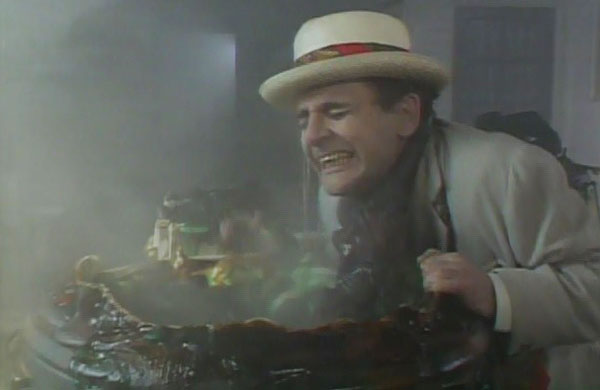 October 1988. In the year since the last blog entry, Margaret Thatcher became the longest-serving British Prime Minister of the 20th Century, just as the Government announced that the Poll Tax would be introduced in 1990. Oblivious that the chain of events that will culminate in her defenestration have been set in motion, Thatcher declares she will remain in power until 1994. Hubris, as ever, will be followed by Nemesis.
And in Doctor Who, celebrating the silver anniversary we have Nemesis of the Doctor – sorry – Remembrance of the Daleks. The longest-running science fiction television series of all time is only a couple of years away from its own demise. However, there is nothing in Remembrance that suggests that this is a moribund show crawling towards death.
Instead, we get the best story since 1984, and arguably since 1979. Or, not unarguably, the best story ever. Because however good The Caves of Androzani is – and it is astonishingly good – it is by no means a viable model for how to make Doctor Who. All the lessons taken from it – the cynicism, the violence, the Doctor’s tangential involvement in the story – were ones that helped to wreck Season 22 and ended up poisoning the series just as effectively as the raw spectrox poisoned the fifth Doctor, to the point that a kill-or-cure regeneration was really the only way to go. In Androzani, Robert Holmes shows us a beaten Doctor who’s given up getting involved or trying to avert massacres as a pay off to “There should have been another way” and “I must mend my ways”.
Remembrance, on the other hand, presents us with the Doctor the sixth might have been – a Doctor who’s no longer effete, neurotic and incapable of effective action, but one with a plan to put an end to evil, and the energy to follow it through.
Given by 1988 Doctor Who was obviously on life support, Remembrance is far, far better than anyone really needed it to be. It has a kind of swagger to it – “I can do anything I like” – that belies the fact this is still a programme utterly unloved by the BBC. It’s a show that’s proud to celebrate 25 years of Doctor Who whilst giving us a new approach to making the show – a new Dalek paradigm if you like. It’s so self-confident that it’s even willing to incorporate Doctor Who the TV series into itself, circling back to 5:15pm on Saturday 23rd November 1963. Remembrance is like the serpent consuming itself, and what it spits out is a synthesis of what most people in 1988 would have identified as the Golden Age – that vague period between the mid-1960s and the mid-1970s when Patrick Troughton worked with UNIT to defeat Davros and his army of Daleks. In other words, a Golden Age that only ever existed in people’s imaginations, one that takes the best bits of this halcyon vision of what Doctor Who used to be, back in the day, and works them into a story that’s not quite like anything that’s gone before.
Both Ben Aaronovitch and Sophie Aldred mention that Jon Pertwee was their first Doctor, and Remembrance of the Daleks is superficially like the Pertwee era, with the everyday lives of British people disrupted by alien invasions, and a slightly bumbling military operation aiding and obstructing the Doctor in equal measures. It even opens, like Spearhead from Space (and Rose) with a shot of the lonely Earth from space. The references to “Brigadier” and “scientific advisors” drafted from Cambridge obviously recall the UNIT years, but unlike some of the more laboured continuity of something like Attack of the Cybermen, they’re generic kisses to the past rather than specific references. And there’s an equal mix of epic, Hinchcliffe-era cosmic horror, alien possession and a (literally) buried threat from the past rising to menace the present. Meanwhile, Sylvester McCoy’s written like Tom Baker’s Doctor but plays it like Patrick Troughton – a space vagrant who fights monsters.
Beyond that, though, it feels like the whole of Doctor Who is in here, from an unearthly child chanting sinister rhymes in the playground of Coal Hill School to the Dalek Emperor from the TV21 comics to a companion who’s like Leela mixed with Sarah Jane (a violent anarchist revolutionary who’s also the Doctor’s best friend). This is both a historical that’s set within the lifetime of Doctor Who, a “Yeti on the loo”, a Dalek outer-space epic and a Time Lord expose. This is every Doctor Who story ever, including the story of Doctor Who itself.
What’s really fascinating is that all of this is perfectly understandable from an anniversary story – but that was actually Silver Nemesis, which aired around 23rd November 1988. Remembrance of the Daleks is just Ben Aaronovitch and Andrew Cartmel setting the tone for Doctor Who from now on. It introduces a Doctor who despises guns, preferring to talk his enemies into giving up, or tricking them into defeating themselves. It introduces the pervasive theme of the McCoy years, that the past has to be paid for somehow, and that the evil the Doctor has to face isn’t just buried horror, but your own buried horrors. This isn’t just a straightforward celebration of the past, but it dares to expose the ugly racism of the 1960s – and perhaps even the ugly racism of some 1960s’ Doctor Who. It has a Doctor struggling with the consequences of his choices, and it ends, like many McCoy stories, at a funeral, with an equivocal and unresolved question about whether one can ever really assess the rights and wrongs of decisions until decades after the event. Just as we judge the attitudes of people in history, so history will judge us.
History hangs heavy over this story – not only Doctor Who’s history, which is rattled off in a couple of back-and-forth dialogues between the Doctor and Ace covering the story of the first of the Time Lords, and starting to explicitly link Omega and Rassilon for the first time. But there is also John’s history – an immigrant Londoner rather than an African, and there’s Ratcliffe’s perverse desire to re-live the Second World War and turn the clock back on the immigration of people like John. Right the way through this whole era, the past is something to be confronted. Ace is running from her past until the Doctor makes her face it. The idea behind the “Cartmel Masterplan”, which debuts here, is that the Doctor has been running from his secrets for long enough, and that it’s time to finally face up to some of them.
Then there are the Daleks. The Doctor reels off their history to Ace without pausing for breath: “The Kaleds were at war with the Thals. They had a dirty nuclear war. The resulting mutations were then accelerated by their chief scientist, Davros. What he created them he then placed in a metal war machine, and that’s how the Daleks came about.” They haven’t been used this well since 1975, and they work so well here because Aaronovitch boils them down to their most basic nature – racist Fascists, born in war, and bent on conquering and enslaving the rest of the universe. That he manages to make Remembrance a natural follow-on from the increasingly convoluted occasional story arc that’s been going on since Genesis of the Daleks – of the Daleks becoming reliant on logical battle computers, and intent on conquering Gallifrey while in the background Davros schemes to create a new race of Daleks that won’t turn on him – without actually directly mentioning any story other than Genesis is a masterstroke. Chucking in an Emperor, a mention of Spiridon and the invasion of Earth in the 22nd Century means that just as much as this feels like every Doctor Who story, it’s also every Dalek story.
Aaronovitch’s genius is that he makes this work effortlessly. After all, Attack of the Cybermen – which has a lot of superficial similarities (a Totters Yard setting, the secret of time travel and every Cyberman story ever) – is a car crash of a story. But whereas Attack is elitist, fixating on the details of The Tenth Planet and The Tomb of the Cybermen and not really adding much that’s new, Remembrance feels universal – even the title suggests that this is about what people fondly remember. The way Aaronovitch mingles the epic battles of Daleks and Time Lords with Mike’s mum’s everyday racism and the clientele of Harry’s café is a tentative step in the direction of the last great Time War and the Powell Estate. The New Adventures, which were the single official continuation of Doctor Who between 1991 and 1996, and particularly the work of Paul Cornell owe a debt to this approach. In turn, those inspired Russell T Davies’ first published Doctor Who story, Damaged Goods, which features the Doctor searching for a Time Lord weapon against a backdrop of recent history and a companion in a doomed love affair.
Remembrance of the Daleks was by no means the only way to take the series forward into the 1990s, but it refocused it on the things it does exceptionally well. In so doing, it not only celebrated 25 years of Doctor Who, but also set a direction for the 25 years to come.
Next Time: “For the first 19 years of my life, nothing happened. Nothing at all. Not ever. And then I met a man called the Doctor. A man who could change his face. And he took me away from home in his magical machine. He showed me the whole of time and space. I thought it would never end. That’s what I thought.” Survival.
1987: Time and the Rani
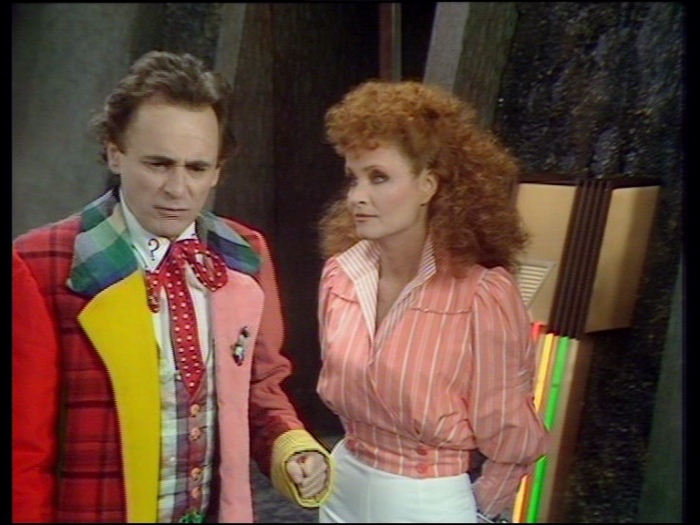 September 1987. In the nine months since The Trial of a Time Lord, the Conservative Party won the 1987 UK General Election. But while Margaret Thatcher is back, Colin Baker is gone – sacked by the BBC as a very public way of disowning the programme and its direction. 10 years after Philip Hinchcliffe was dismissed for making Doctor Who too violent, the show is once again in crisis mode. For the third time in a decade, it’s all change.
Given that no-one’s really known what to do with Doctor Who since 1977, it’s a miracle that the show has staggered on for so long without any obvious affection or support from within the BBC. No wonder BBC management tried to quietly kill it in 1985. Their failure to carry through with that decision and the brouhaha over Season 23 seem to have wiped out any lingering goodwill for the programme. Reading Richard Marson’s recent biography of John Nathan-Turner it’s obvious that BBC1’s controller Jonathan Powell would have liked nothing more than for Doctor Who to just have vanished entirely. But the BBC has always been a cautious organisation, and to wield the knife again so soon after the previous furore was unthinkable.
So we get to Time and the Rani – a story practically no-one at the BBC wanted to make (including the new script editor Andrew Cartmel, and Colin Baker – who refused to take part in a handover). Even the writers, who put this together as a swansong for the sixth Doctor, weren’t overly keen on reworking it for Sylvester McCoy and by all accounts found it an unhappy experience. This is probably the least-loved Doctor Who story, both in front of and behind the scenes.
But here it is, the runt of the litter. What is there to say about a story that languishes in 198th place on Doctor Who Magazine’s poll of the first 200 stories?
Well, for a start, this was meant to be a rescue job for the sixth Doctor – the story that redeemed his character, and showed him at his best before he shuffled off this mortal coil. Time and the Rani shows a melancholy Doctor regretful of his past, showing concern for his companion and compassion for the Rani’s victims. He apologises to the Rani (whom he thinks is Mel) for being short with her, and mourns the deaths of Sarn, and even a Tetrap. He pauses to express his sorrow at Sarn’s “sad skeleton”, and, at the end, would presumably have sacrificed himself to destroy the giant brain and save Lakertya. Thought it’s an incredibly lightweight story, it’s the right end for the sixth Doctor: not wiped out at the end of another massacre, but bravely preventing one, and saving the universe to boot.
And because Time and the Rani was clearly conceived as a story to fix the sixth Doctor, that this became the seventh Doctor’s first story is fortuitous. So many of the qualities McCoy brings to the role – a wistfulness, and a concern for the small things in life – are here in the mix. By getting the character of the Doctor right for the first time since, well, The Mark of the Rani, Pip and Jane Baker make sure this new Doctor sets off on the right foot. And although McCoy overplays some scenes, and has an early tendency to swallow some of his lines, he plays the Doctor’s introspection and melancholy very impressively indeed.
The other interesting thing about this is that from the second he wakes up, the new Doctor is planning to get things done: a temporal flicker in Sector 13 needs investigating, and something’s up on Centauri VII. The sixth Doctor was meant to be the proactive incarnation, sorting things out where the fifth Doctor prevaricated. As we’ve seen, that never really worked out. But the seventh Doctor seems to be conceived along the same lines, always planning, always thinking a few moves ahead. This is going to become one of the defining characteristics of this incarnation: his forward planning. No longer an aimless wanderer in the fourth dimension, but a fixer, deliberately going to Paradise Towers, Terra Alpha and Victorian Perivale to investigate and resolve strange goings on.
Then there’s the look of the thing: after The Leisure Hive, Time and the Rani is Nathan-Turner’s second chance to radically overhaul the series. There’s the first significant change to the opening titles since 1980, plus Keff McCullloch’s new arrangement of the theme tune. Andrew Morgan’s direction is quietly impressive – less showy than Lovett Bickford’s, but with an equal emphasis on revealing the monsters through brief glimpses of details: a claw or a foot stamping into shot. Computer graphics – including the TARDIS crash landing and the Rani’s death bubbles – appear for the first time, so this looked as visually fresh in 1987 as The Leisure Hive did in 1980.
That’s more than lipstick on a pig – Time and the Rani is by no means a great story, but its problems aren’t fundamental issues about the role of violence, the objectification and abuse of Peri, or the character of the Doctor. In trying to write out Colin Baker in a story where he gets to be Doctorish and heroic, the Bakers by default introduce Sylvester McCoy with those same characteristics. This is by far the weakest seventh Doctor story, but that’s only because the next three years are going to see a renaissance in the quality and ambition of the show. There’s a steady upwards trajectory across the McCoy era, and it begins in Time and the Rani. If this had been Colin Baker’s last serial, it would barely have made it into the bottom half of his episodes. Plus, a story that has Kate O’Mara doing a Bonnie Langford impression can be forgiven practically anything.
Time and the Rani is a story about a planet that has fallen for many years into self-indulgence and indolence, battered by enemies within and without, but finally shaking off its torpor and taking control of its own destiny. If that isn’t a metaphor for Doctor Who in 1987, I’m not sure what is.
Next Time: “Your voice is different, and yet its arrogance is unchanged. Welcome to my new Empire, Doctor.” War on Earth in Remembrance of the Daleks.
 Next Time...